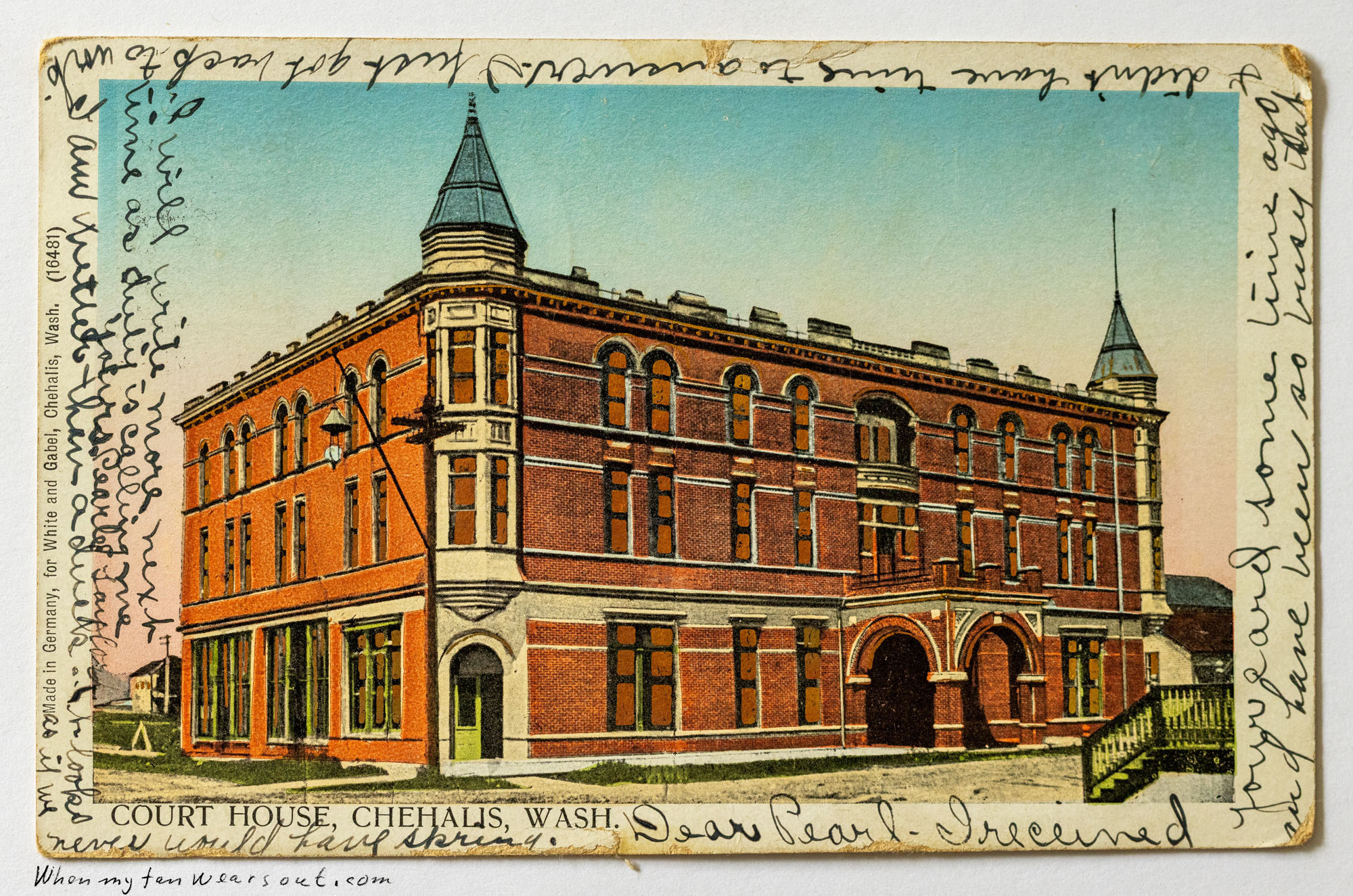
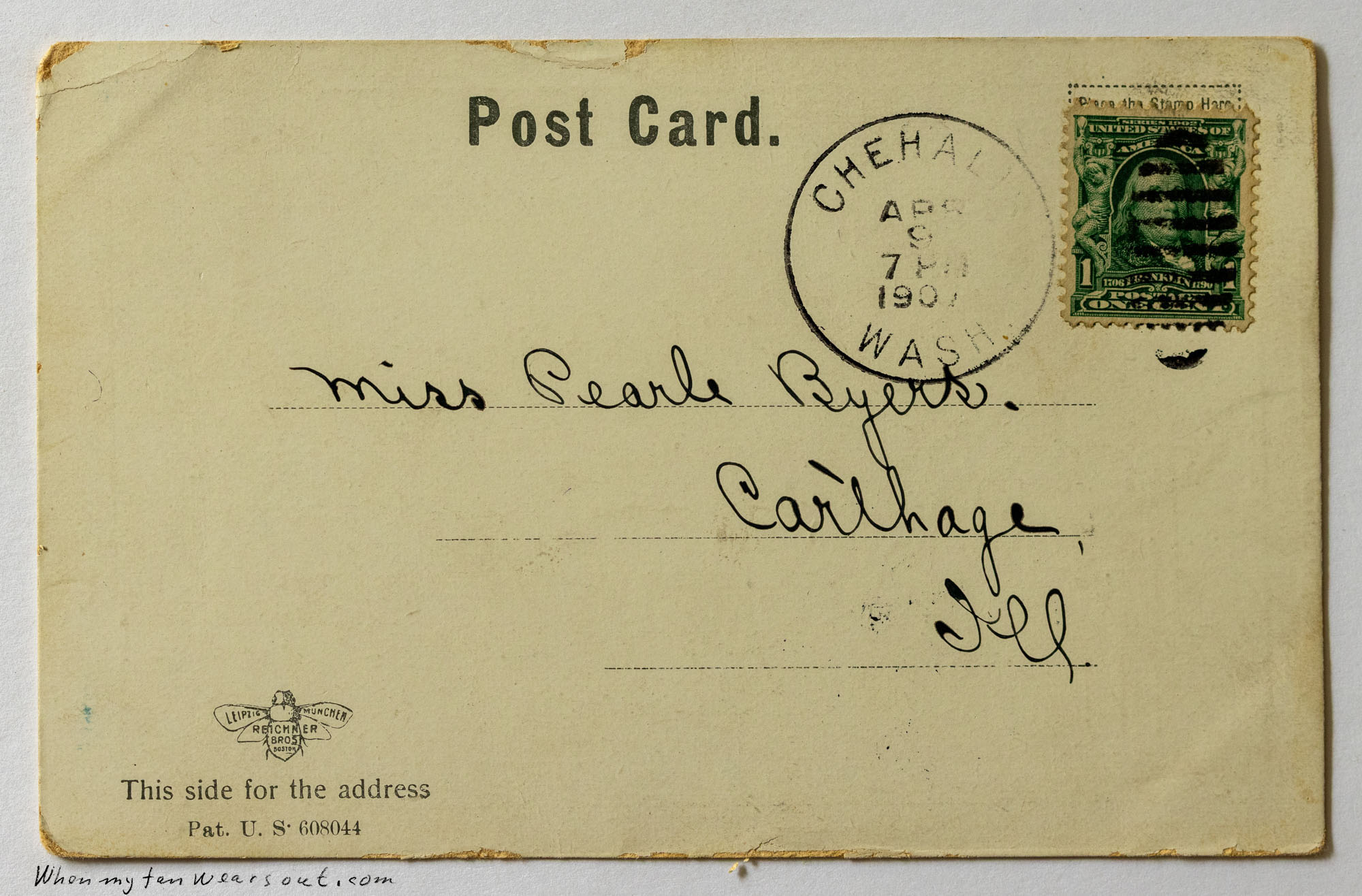
Front — Dear Pearl – I received your card some time ago and have been so busy that I didn’t have time to answer. I just got back to work and am busier than a devil. It looks as if we never would have spring. I will write more next time as duty is calling me. from Angus
Postcard Information
Postmark: Chehalis, Wash., APR 9 1907
Sent To: Carthage IL
Era: Undivided Back (Pre-1907)
Publisher: White and Gabel, Chehalis, Wash.
Print Origin: Printed in Germany
Stamp: 1¢
Distance Traveled: ~1600 miles
Notes: Undivided back card with message written entirely on the front.
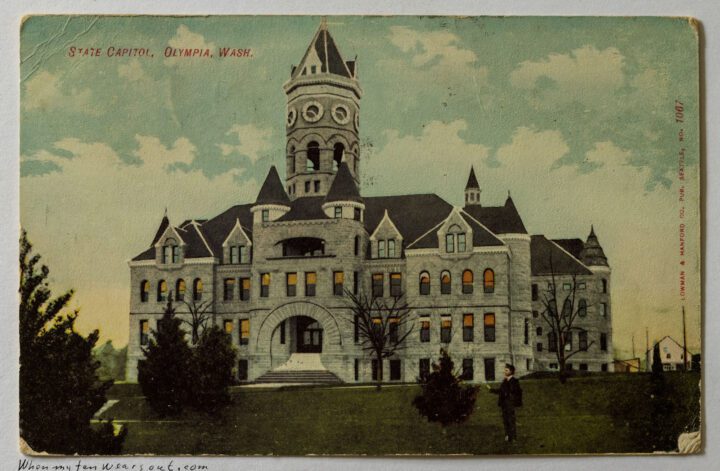
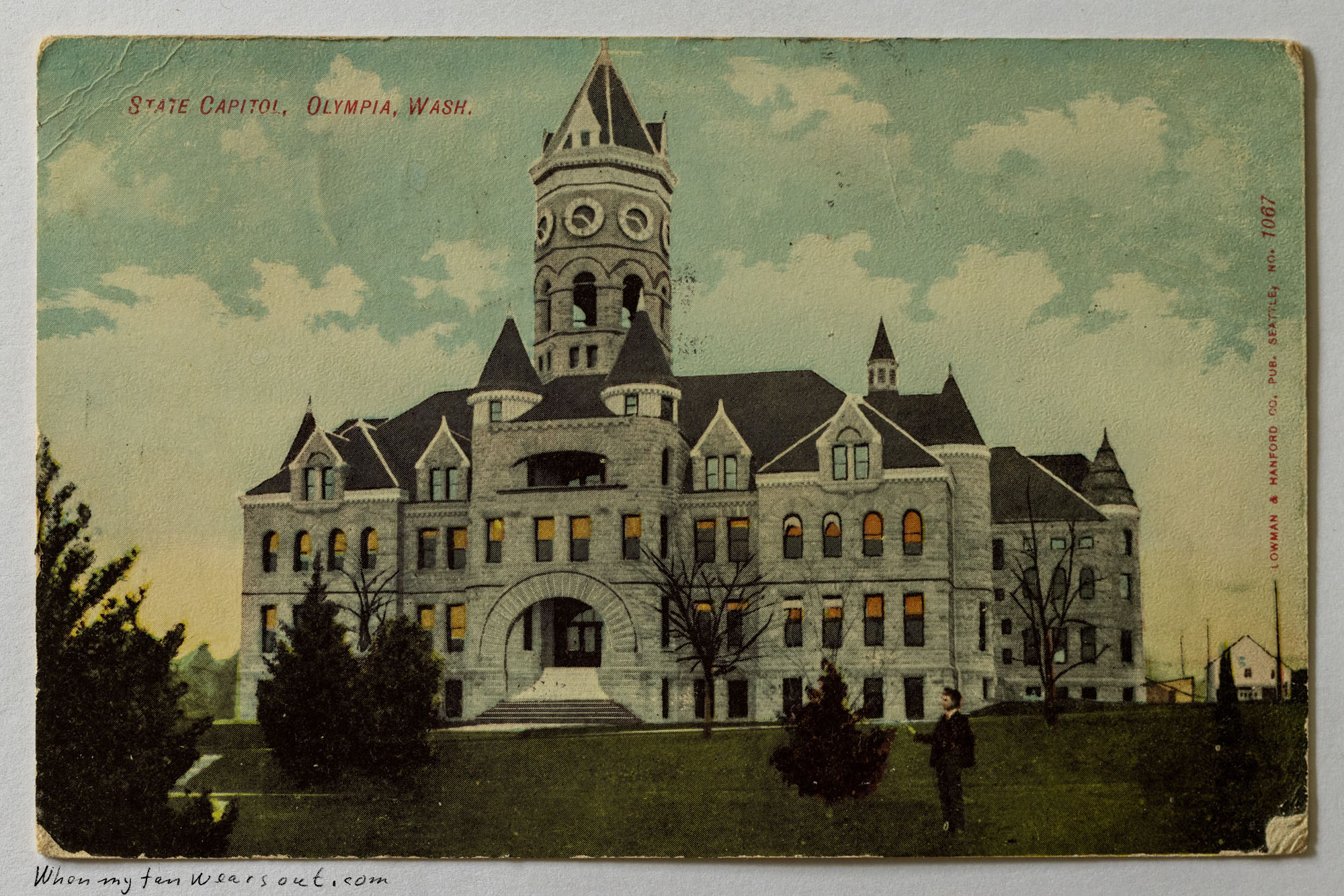
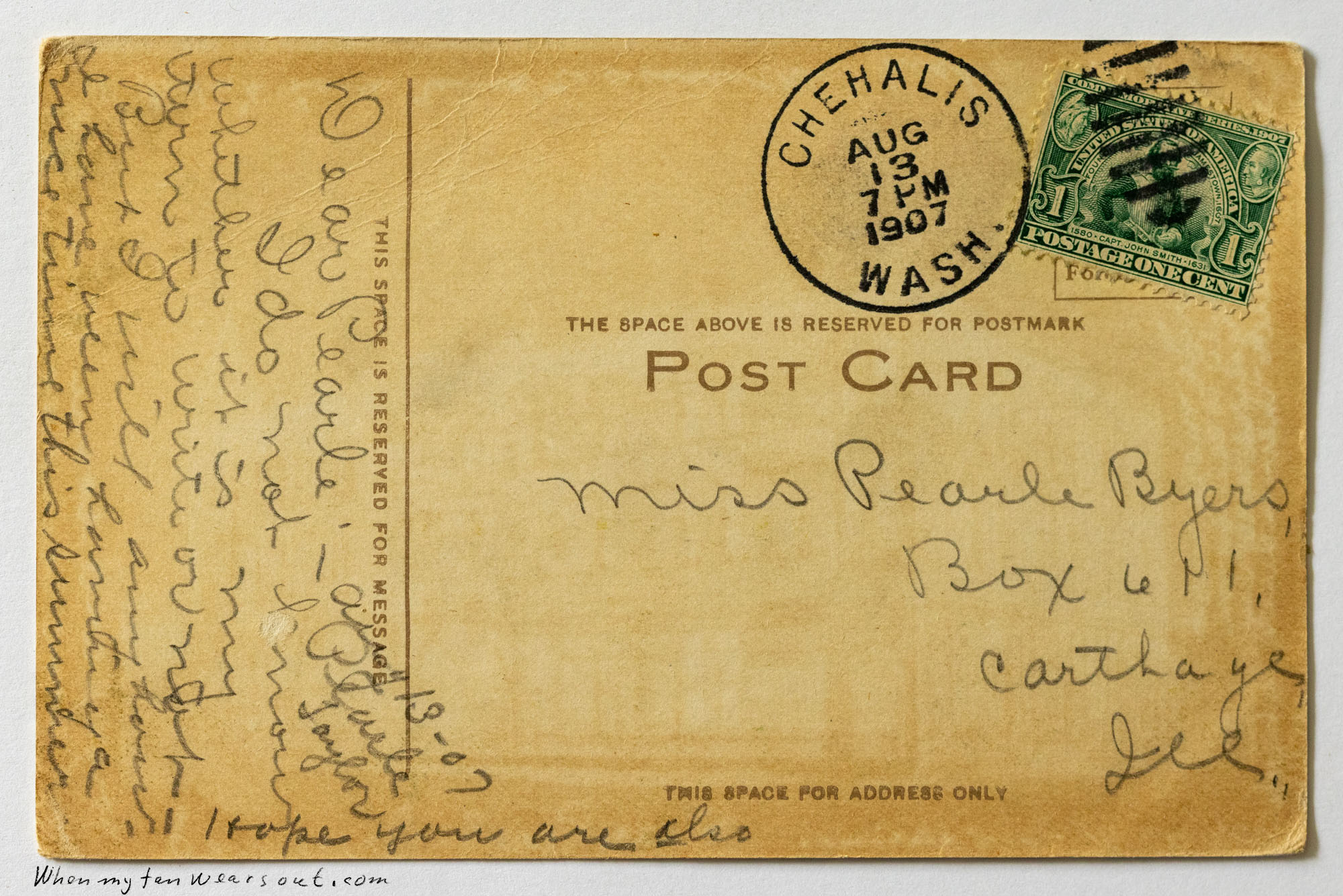
Back — 8/13-07 Dear Pearle – I do not know whether it is my turn to write or not, but I will anyhow. I have been having a fine time this summer As ever Taylor [?] I hope you are also
Postcard Information
Postmark: CHEHALIS, WASH., AUG 13 1907
Sent To: Carthage IL
Era: Golden Age (1907–1915)
Publisher: Lowman & Hanford Co., Seattle, Washington
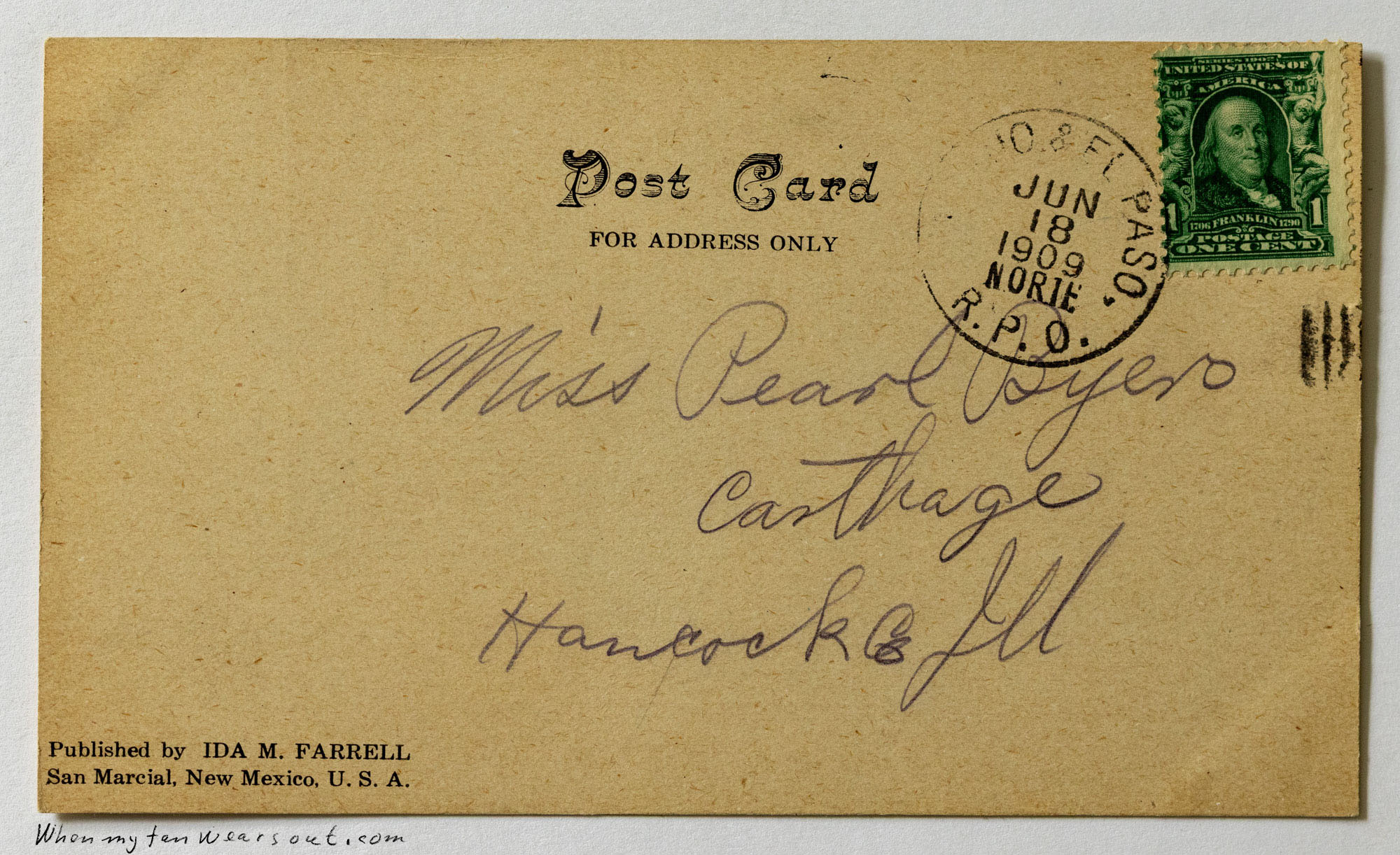
Publisher: IDA M. FARRELL, San Marcial, New Mexico, U. S. A.
Stamp: 1¢
Distance Traveled: ~1070 miles
Notes: Undivided back card postmarked after 1907.
About This Card
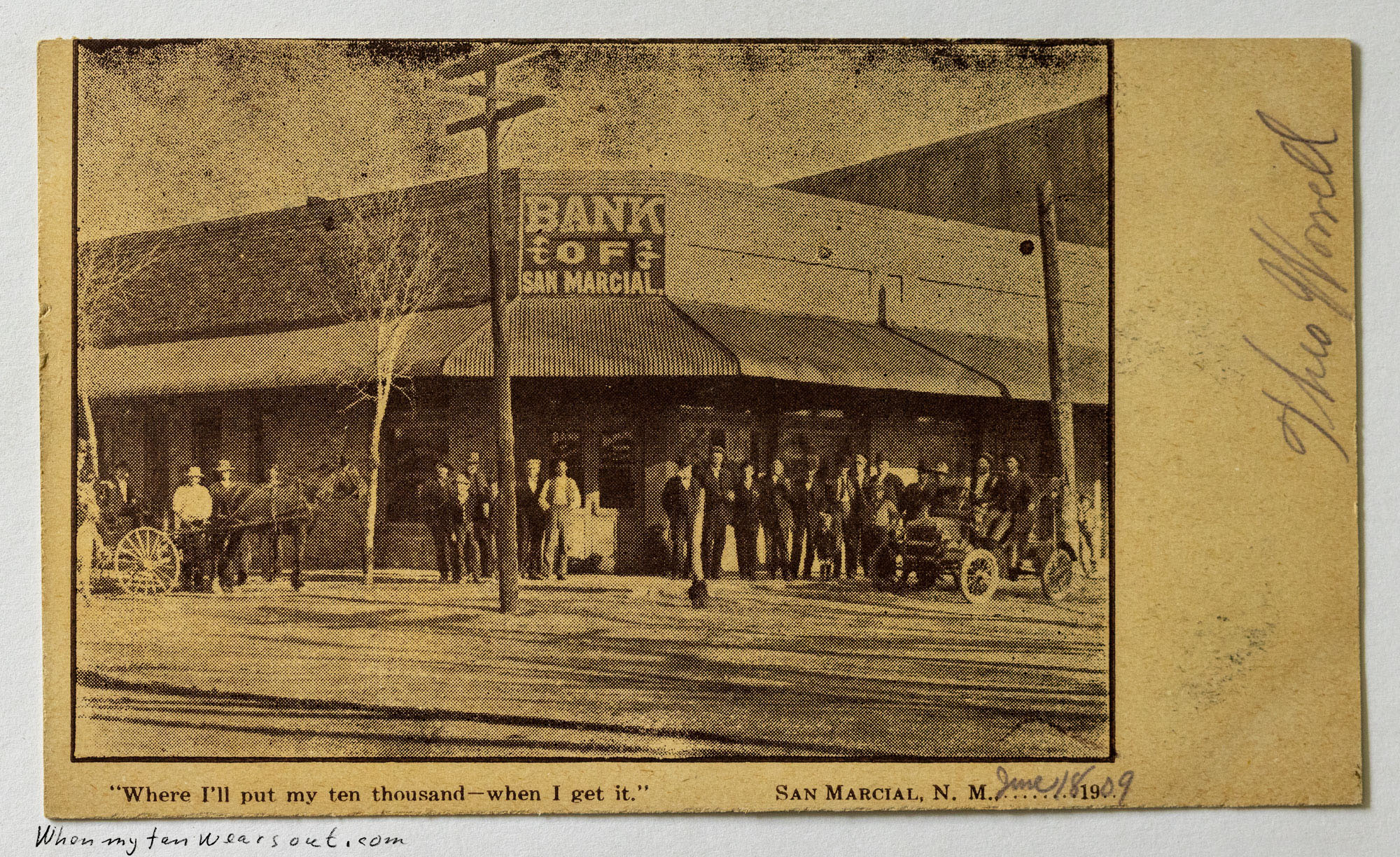
San Marcial, New Mexico no longer exists. The town stood in a broad bend of the Rio Grande in Socorro County, and the river destroyed it twice — a major flood in 1929 inundated the town, and a catastrophic flood in 1937 buried what remained under silt and debris. The community was abandoned and was never rebuilt; today the site lies within the Bosque del Apache National Wildlife Refuge. Thomas Worrell was photographed or purchased a card showing the Bank of San Marcial on the town’s main street in 1909, and the card travelled north on the El Paso Railway Post Office route — sorted by a clerk on a moving train. The town Worrell photographed had about thirty years left.
Stamp: NOT VISIBLE — Stamp box is empty but contains "AZO" with four upward-pointing triangles in the corners.
Distance Traveled: Undetermined
Notes: Blank card. This is a Real Photo Postcard (RPPC).
About This Card
A small wooden house nearly swallowed by tall grass, with a boardwalk leading to the door — the AZO stamp box with four upward-pointing triangles dates this real photo postcard to between 1904 and 1918. Someone made this image deliberately: the composition is centered, the light is good. Whether it records a homestead, a claim shack on the prairie, or a seasonal cabin is impossible to say without more information. The overgrowth suggests abandonment or at minimum long neglect — or perhaps just a summer between tenants. It’s the kind of photograph that raises more questions than it answers, which may be exactly why it ended up in a collection.
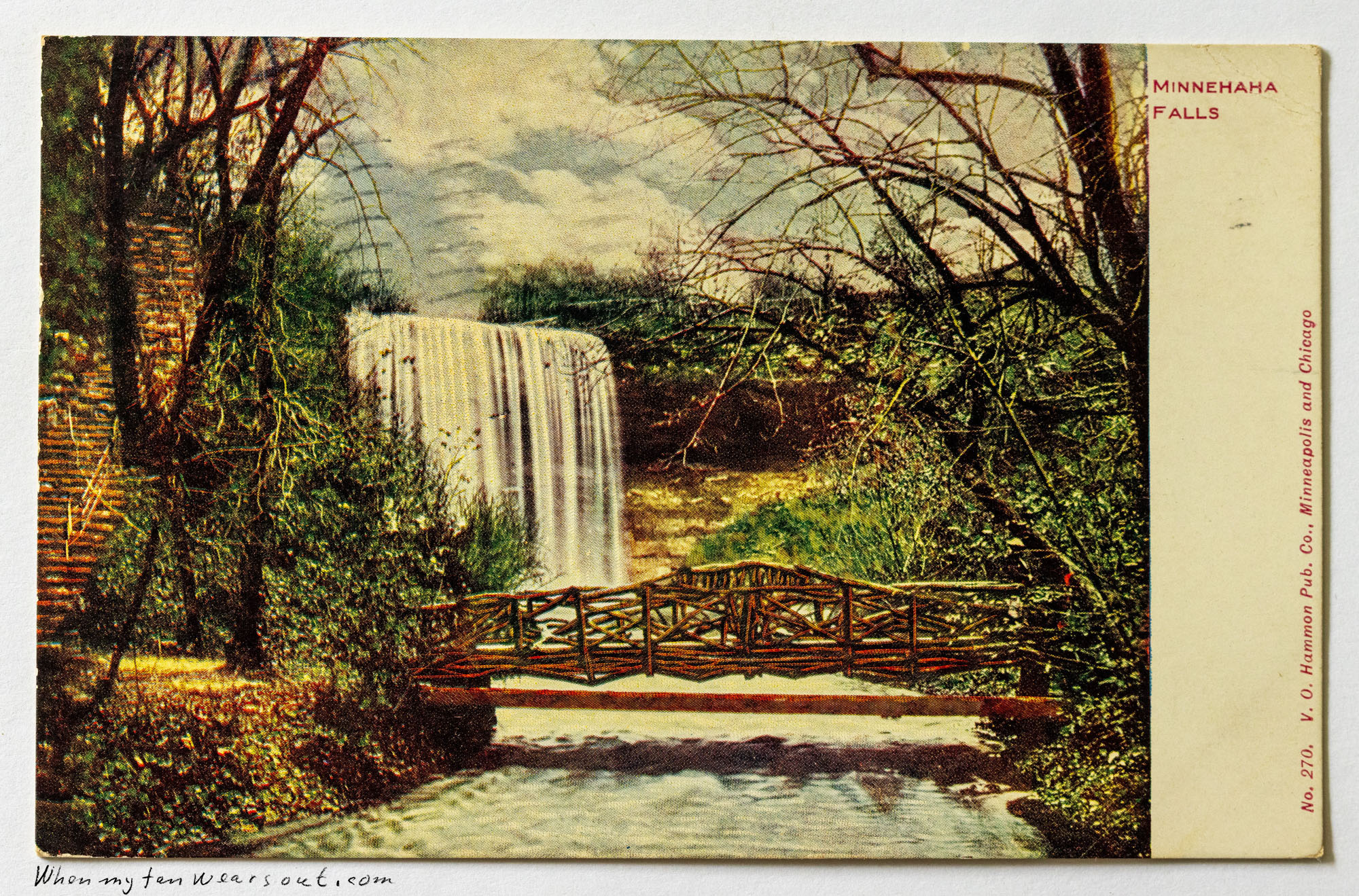
Back — Aug. 1 909. All Ok. at Minneapolis mee-nee-so-ta. Otha + Nona.
Postcard Information
Postmark: MINNEAPOLIS, MINN., AUG 4 1909
Sent To: Carthage IL
Era: Golden Age (1907–1915)
Publisher: V. O. Hammon Publishing Co., Minneapolis and Chicago
Stamp: 1¢ — Features a profile portrait of Benjamin Franklin.
Distance Traveled: ~330 miles
About This Card
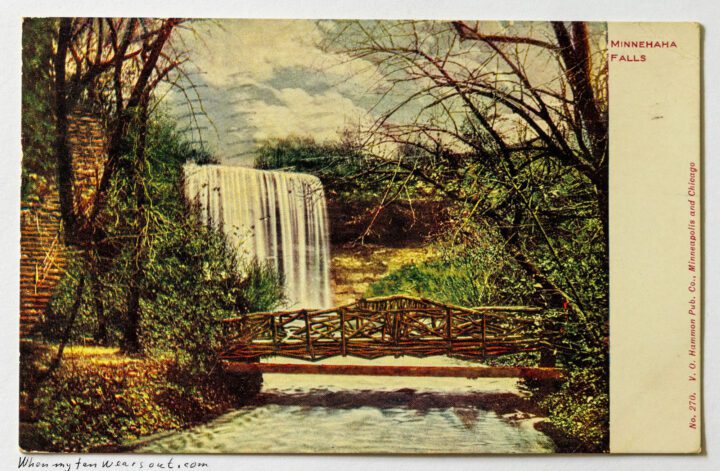
Minnehaha Falls in Minneapolis drops about 53 feet over a limestone ledge and flows into the Mississippi less than a mile downstream. Henry Wadsworth Longfellow described the falls in “The Song of Hiawatha” (1855) without ever having visited — he worked from an engraving and a description — but his poem made the falls one of the most famous natural features in America. Otha McMinimy and his wife Nona were passing through Minneapolis when they sent this card. Otha’s father was the Carthage-area postman; Frank, Otha’s brother, would later serve in France during World War I and send postcards from cathedrals.
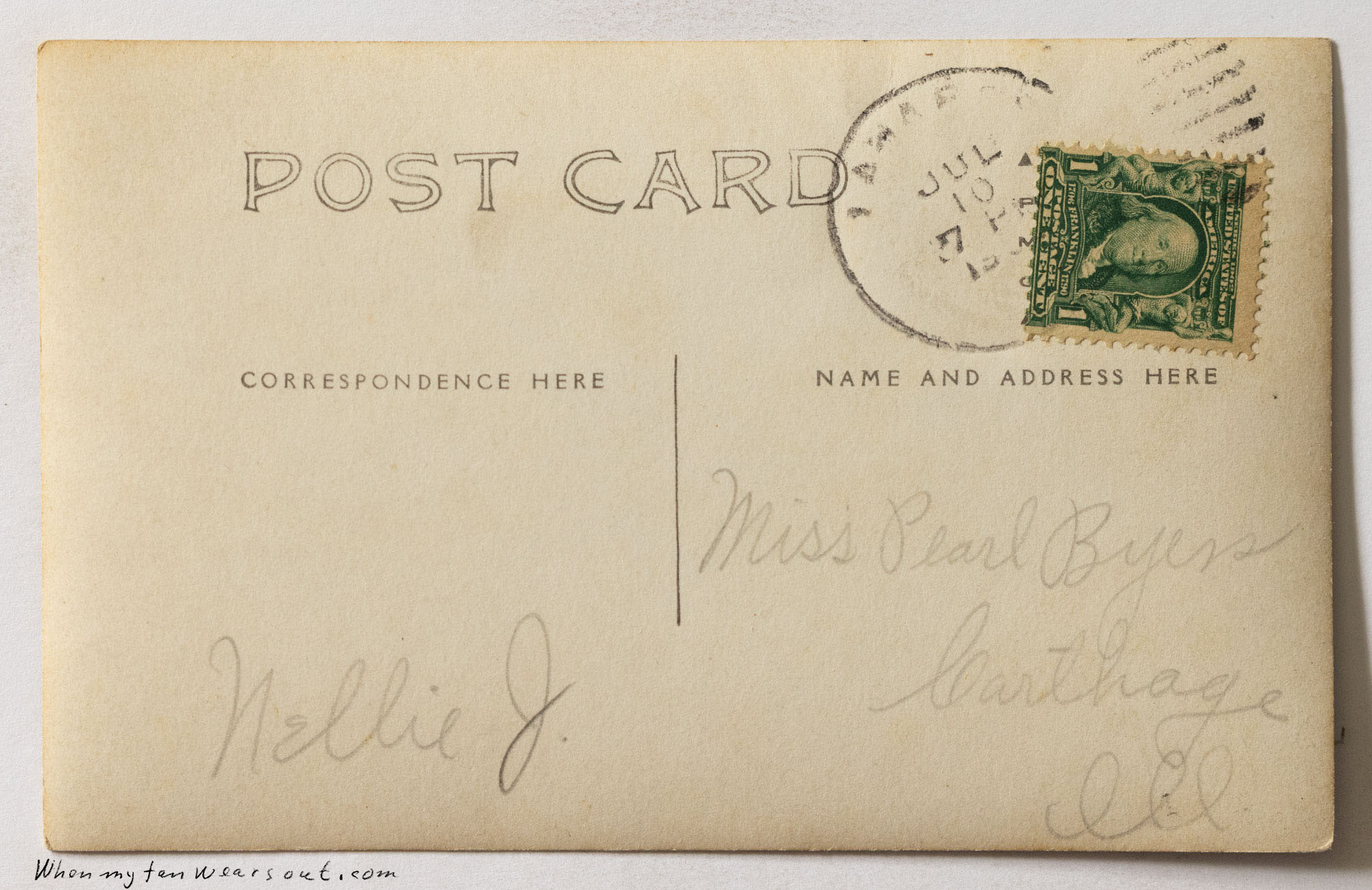
Back — 11/12/09. Having visited P.O. it reminds me that I owe you a card. & this is [continued below card:] send one. will proceed to do so What did the preacher say about dancing. H.L.
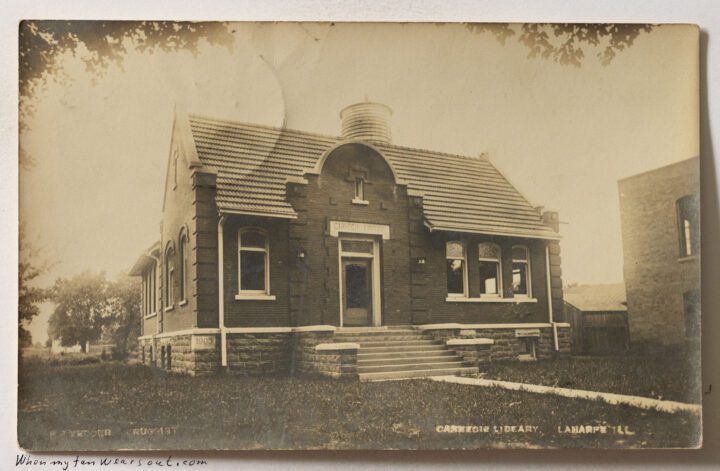
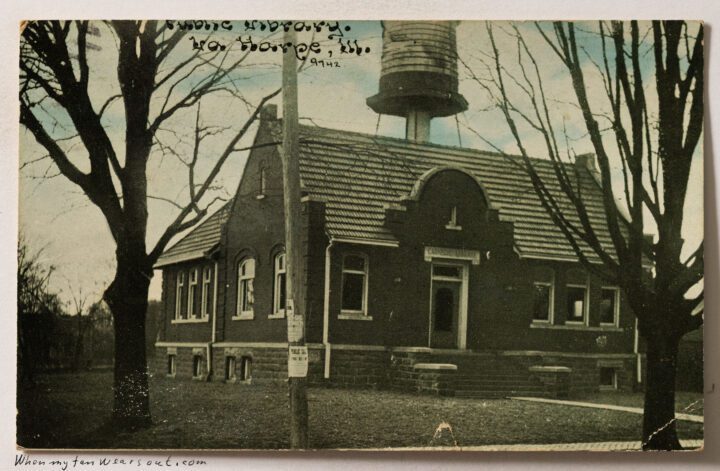
The Carnegie Library in La Harpe, Illinois was funded by a grant from Andrew Carnegie’s library philanthropy program, which built 2,509 public libraries across the English-speaking world between 1883 and 1929. La Harpe’s library, a small brick building with arched windows, represented the community’s eligibility and ambition — Carnegie required communities to provide a site and commit to annual operating funds before he would grant the construction money. Nellie J. sent this real photo postcard from La Harpe. Harvey had grown up on these streets; the library was part of the civic landscape he came from.
Back — Mon. morn. From Leora. Hello kids. How you was! getting plenty of rain now? we are most drowned up here. Belle put in a very bad night last night. I got up to turn her five times before one oclock. She was so nervous. and her rheumatism was part the reason. The piano contest was a hot one Sat. night. write to me. Leora.
Postcard Information
Postmark: LA HARPE, ILL., SEP 25 1911
Sent To: Carthage IL
Era: Golden Age (1907–1915)
Stamp: 1¢
Distance Traveled: ~20 miles
About This Card
This real photo postcard of a dark brick building in La Harpe, Illinois — identified by handwriting as a specific local institution — was sent by Leora, a correspondent who appears briefly in the collection. La Harpe was Harvey’s hometown and the origin point of much of the early correspondence in the collection; it had grown into a stable small city with a business district, a Carnegie library, and the institutional fabric that Hancock County towns acquired in the late nineteenth century.
Back — Hamilton Jan. 24, 08. Hello Effie here is where I send you a postal just for luck and cool weather, how are you these days, fat and sassy or quiet, pleasant or a little of both. Say, it is’nt any of my business but I just thought I would inquire as in regards to your health just for fun. Dont you know? Call me up sometime will you. “Ta Ta” Frank ] F.B.
Postcard Information
Postmark: HAMILTON, IL, JAN 25 1909
Sent To: Carthage IL
Era: Golden Age (1907–1915)
Stamp: NOT VISIBLE — Stamp is missing; the paper is torn where the stamp was originally affixed.
Distance Traveled: ~15 miles
Notes: Senders date in message is written as 1908 ("08"), but the postmark is dated 1909.
About This Card
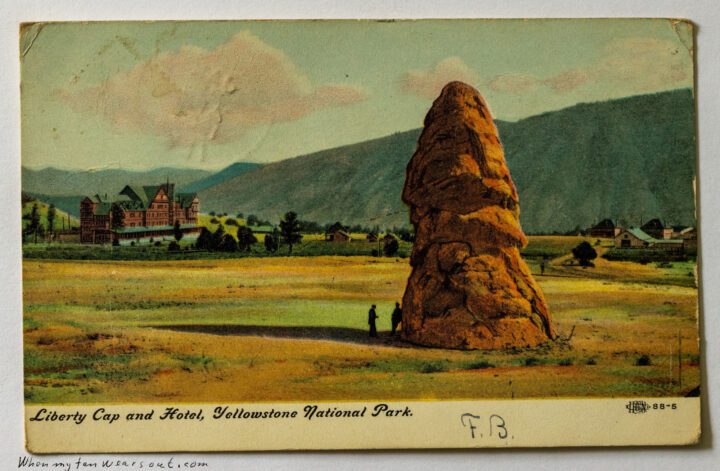
Liberty Cap in Yellowstone’s Mammoth Hot Springs area is a dormant hot spring cone about 37 feet tall — the largest of its kind in the park. It stopped flowing roughly 2,500 years ago and has been cooling and mineralizing ever since. The Mammoth Hot Springs Hotel, visible in the background across the terrace fields, had been in operation since the 1880s and was the main gateway accommodation for visitors arriving from the north. Frank, writing from Hamilton on January 24, made an error in the date — he wrote “08” but the postmark reads 1909. The discrepancy was flagged in the archive. He didn’t mention Yellowstone.
Back — Think this is prettier than the church ] Dear Pearl.- Am having a fine time in Basco. Saw J. S. this morning, and he asked me how Carthage was getting along. I paid [illegible] all [illegible] to Alma Tucker.
Postcard Information
Postmark: BASCO, ILL., JUN 12 1908
Sent To: Carthage IL
Era: Golden Age (1907–1915)
Stamp: 1¢
Distance Traveled: ~15 miles
About This Card
The First National Bank in Basco, Illinois occupied a one-story brick building that was, by the standards of this small Hancock County village, a substantial civic investment. Basco sits a few miles from Carthage, too small to have a high school or a park but large enough to need a bank for the farm families of the surrounding township. A.C.D. sent this real photo postcard from Basco. The bank’s solid brick construction — modest but permanent — expressed the confidence of rural banking in a period when small-town banks were the primary financial institutions for agricultural communities.