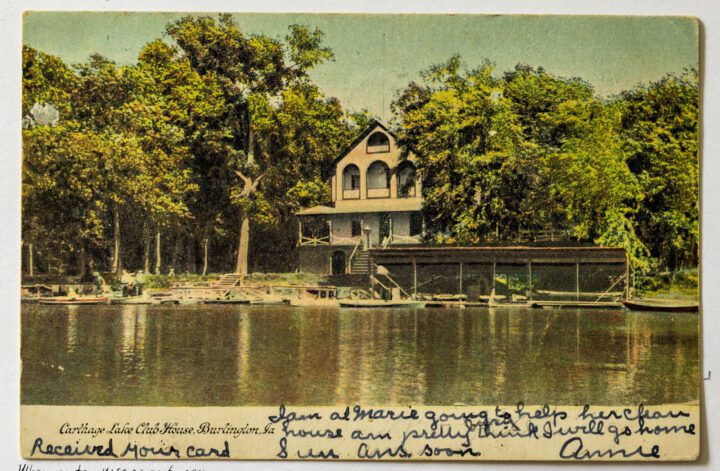
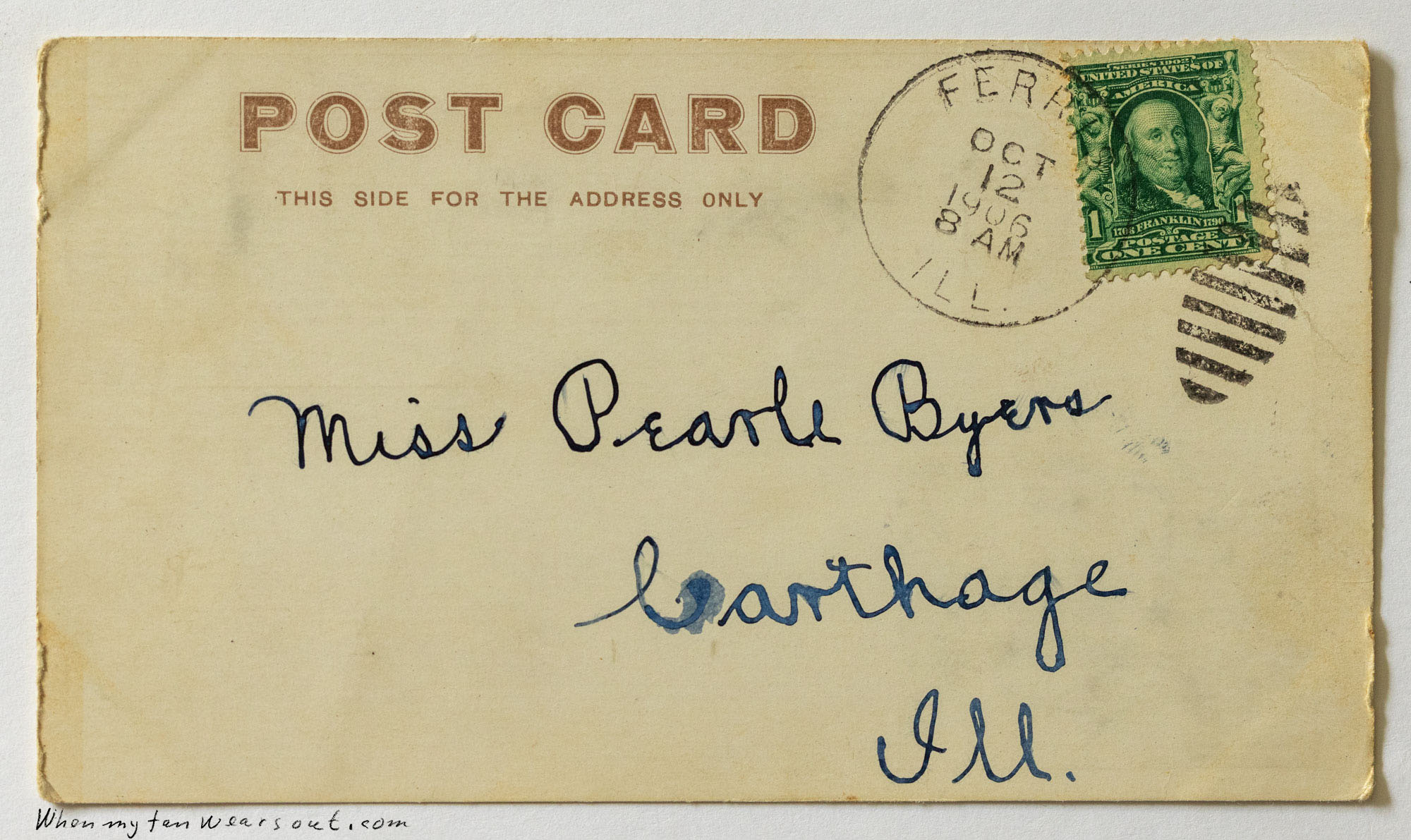
Back — Rec’d your card, many thanks for same. how does the wea- ther strike you – to hot here for me. suppose you enjoy the sunny days latly. the writer. Bess.
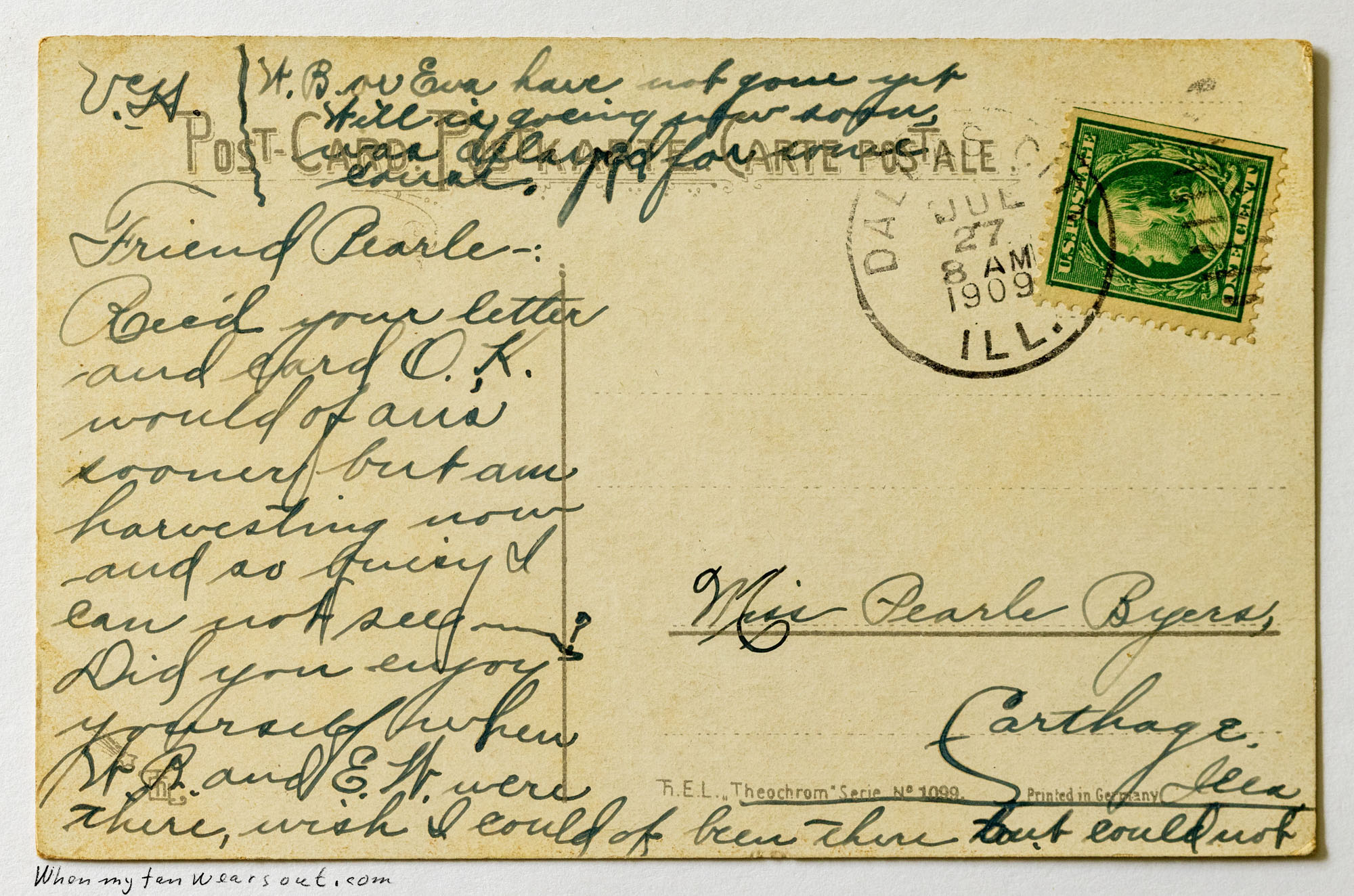
Back — Friend Pearle:- Rec’d your letter and card O. K. would of ans sooner but am harvesting now and as busy I can [illegible] [illegible] Did you enjoy yourself when H. B. and E. H. were there, wish I could of been there but could not [continued on top margin:] V. H. [?] H. B. or Eva have not gone yet still is going for social.
Stamp: NOT VISIBLE — Stamp missing but printed box with EKC logo visible.
Distance Traveled: Undetermined
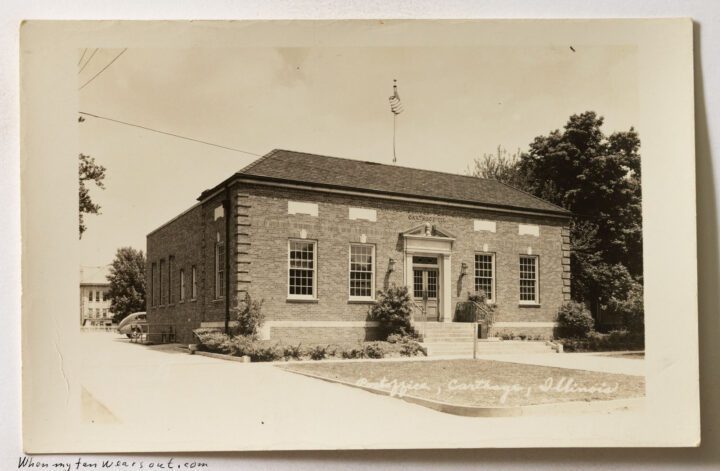
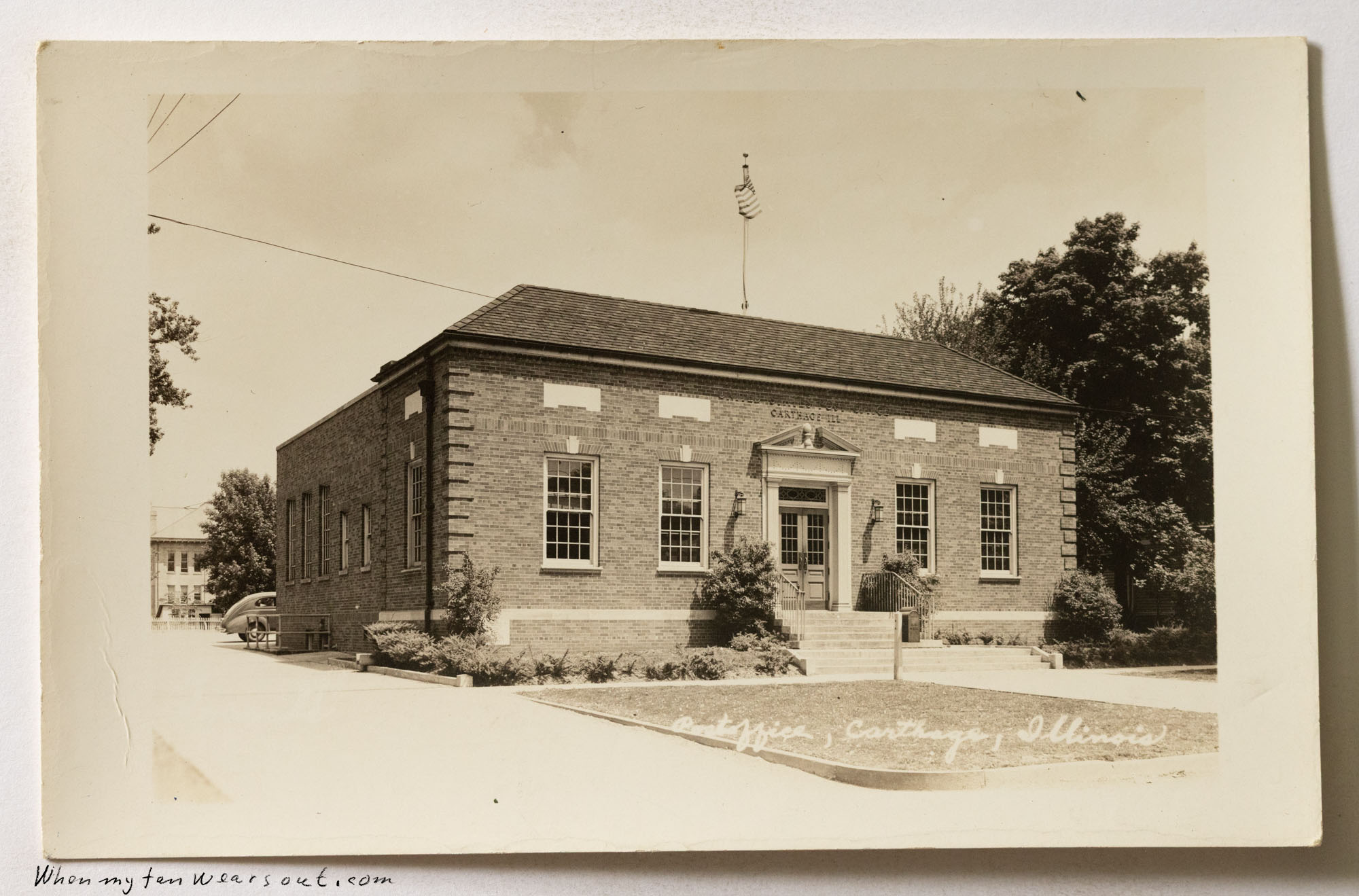
Notes: Blank card. Real Photo Postcard (RPPC). The car and architecture suggest a date in the late 1930s or 1940s, despite the Divided Back layout.
About This Card
The Carthage, Illinois Post Office occupied a brick building that served the city’s federal postal needs in the early twentieth century. As the county seat of Hancock County, Carthage received its federal buildings — courthouse, post office — through the same process of federal investment that gave small county seats their civic permanence. Pearl’s correspondence arrived and departed through this building for most of her life at 318 N. Fayette Street.
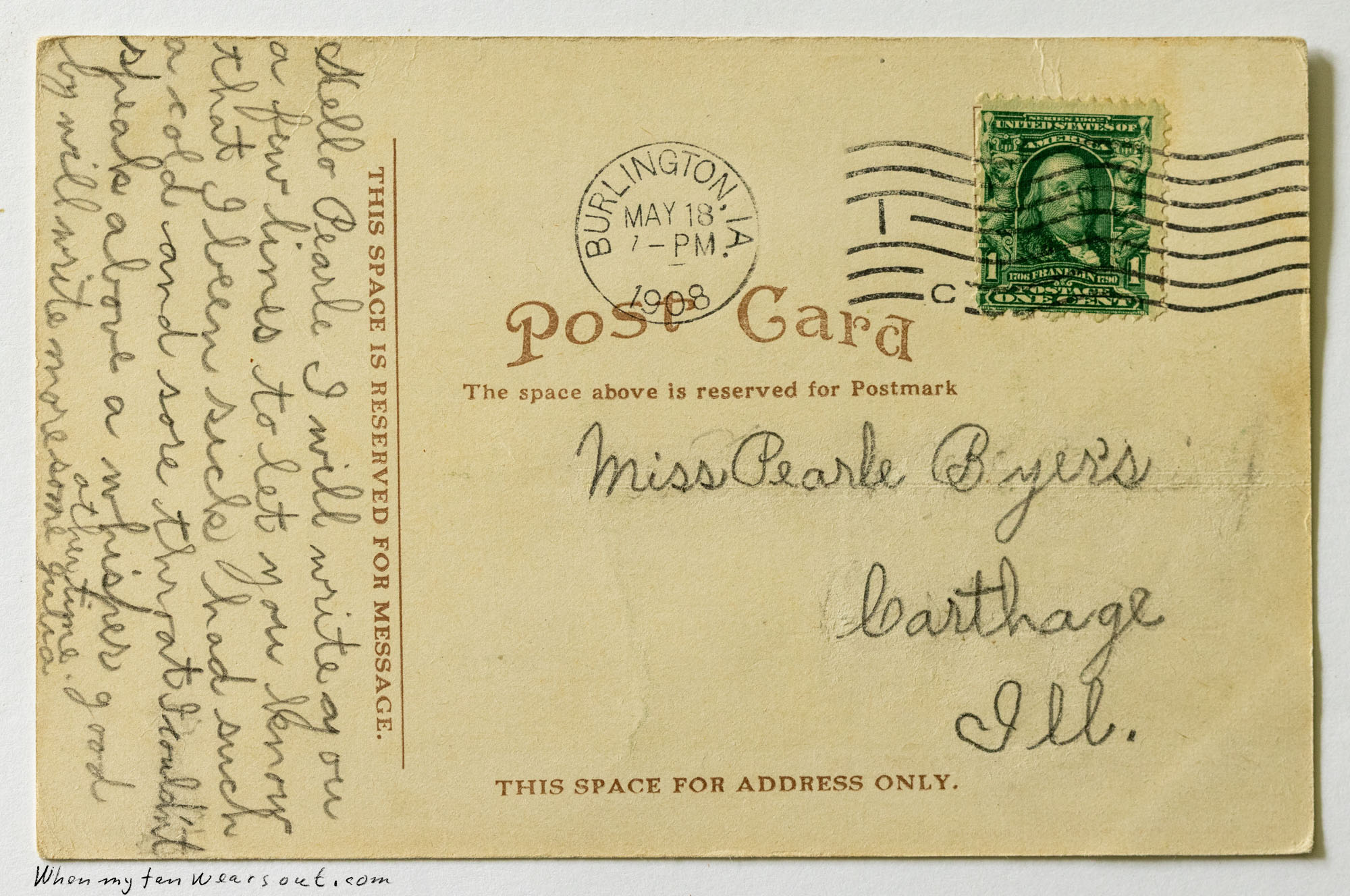
Back — Hello Pearle I will write you a few lines to let you know that I been sick had such a cold and sore throat couldnt speak above a whisper. good by will write more some other time. ] Julia.
Postcard Information
Postmark: Burlington, IA., MAY 18 1908
Sent To: Carthage IL
Era: Golden Age (1907–1915)
Publisher: AXT DRUG CO.
Stamp: 1¢
Distance Traveled: ~30 miles
About This Card
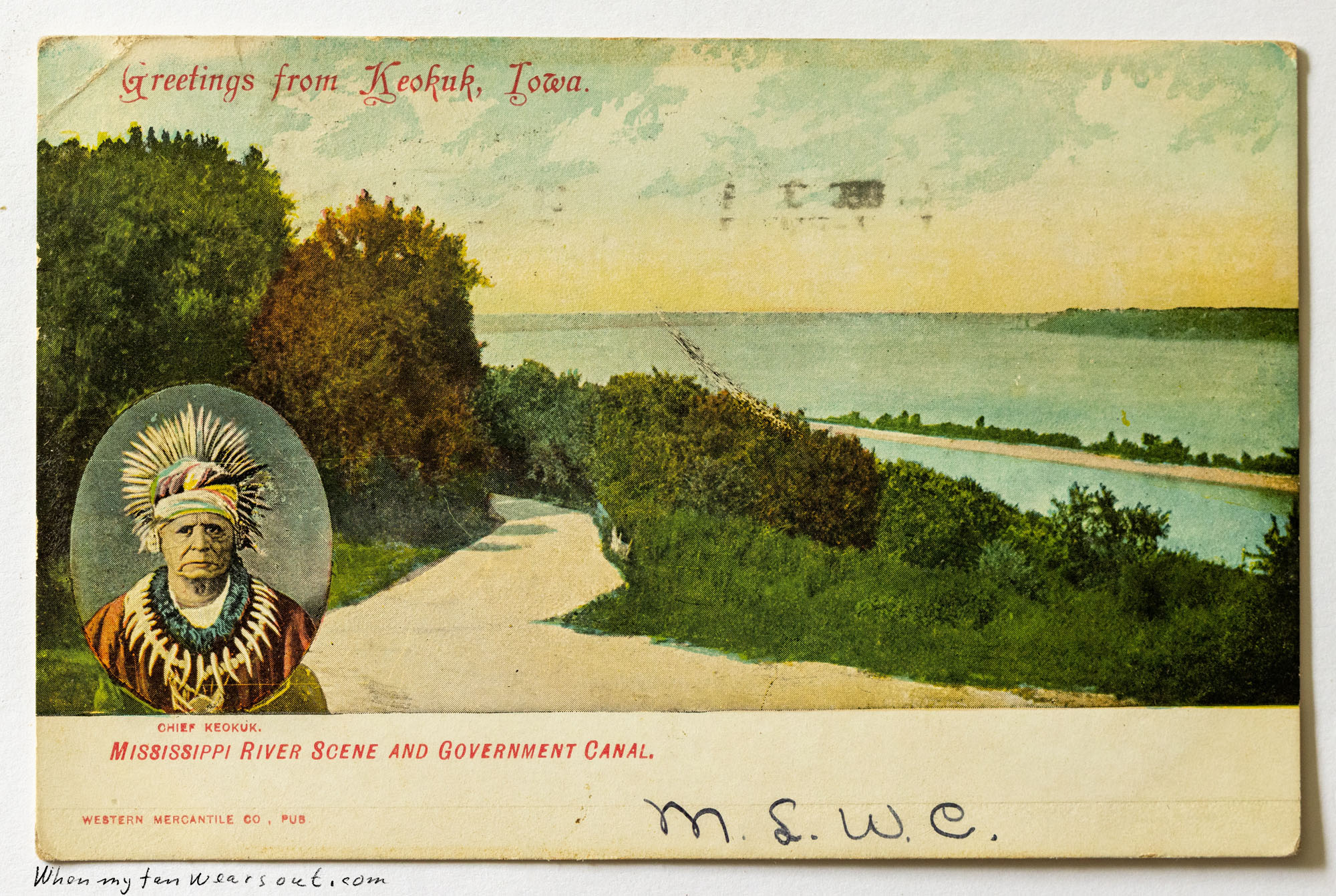
Black Hawk Heights, on the Fort Madison riverfront, takes its name from the Sauk leader Black Hawk, who led his band across this stretch of the Mississippi in the spring of 1832 in what became known as the Black Hawk War — the conflict that effectively ended Native American resistance in the upper Mississippi valley. The brick building with the tall smokestack visible in the background suggests the industrial character of Fort Madison’s waterfront by 1908. Julia, writing from Burlington, had just recovered from illness and was catching Pearl up on her news.
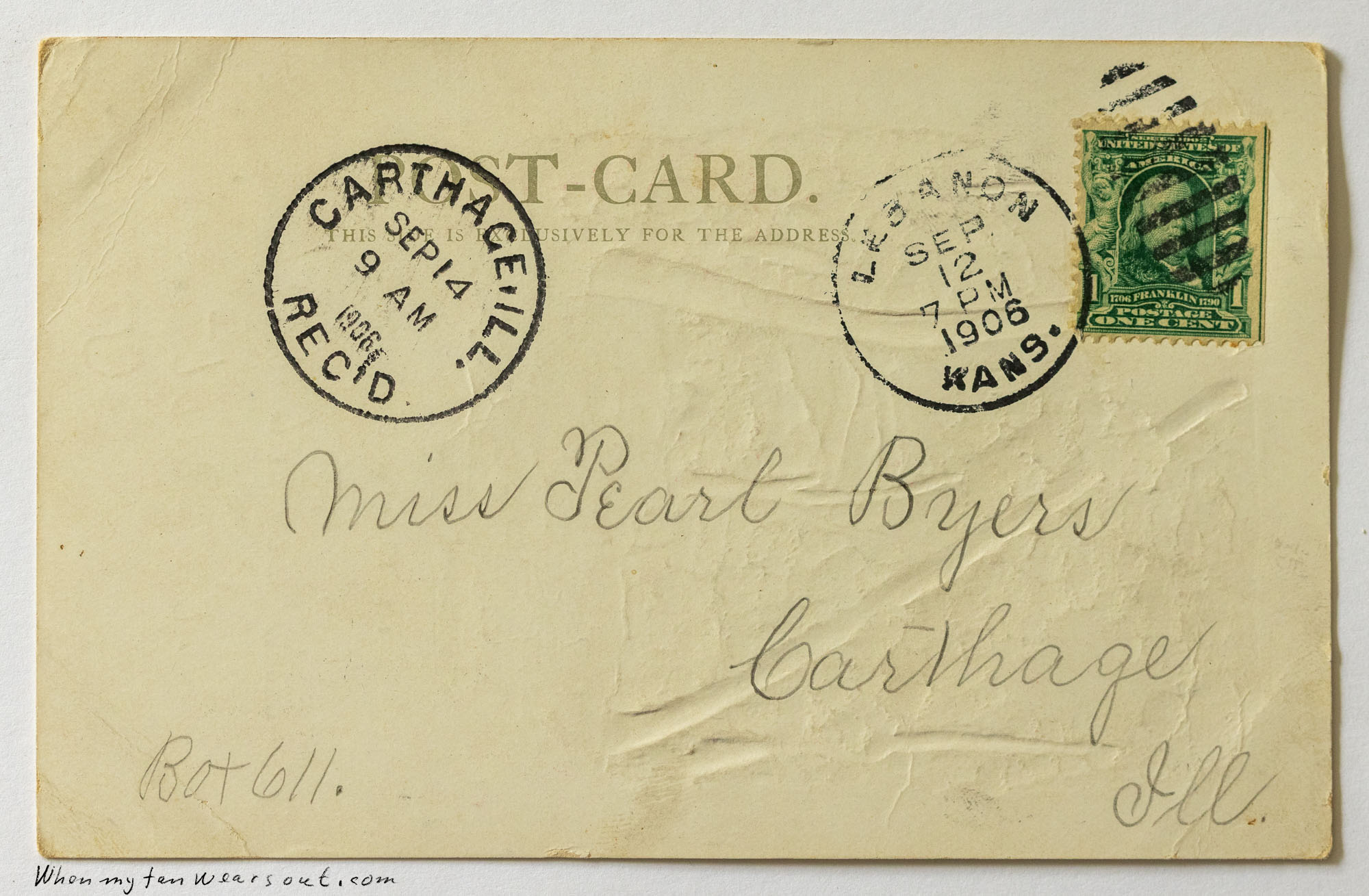
Stamp: 1¢ — Features portrait of Benjamin Franklin.
Distance Traveled: Undetermined
About This Card
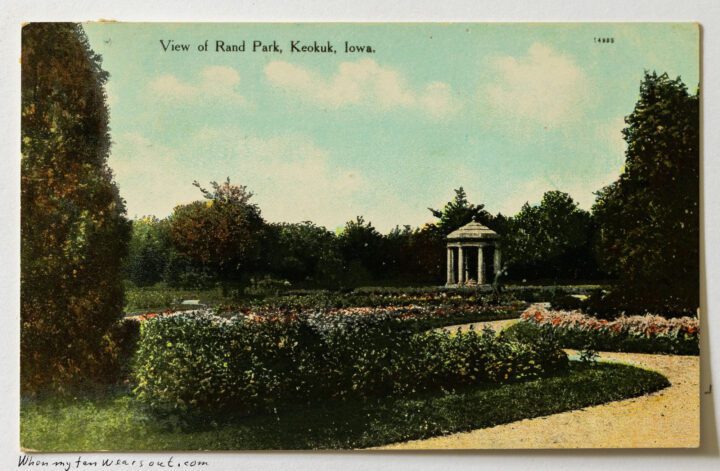
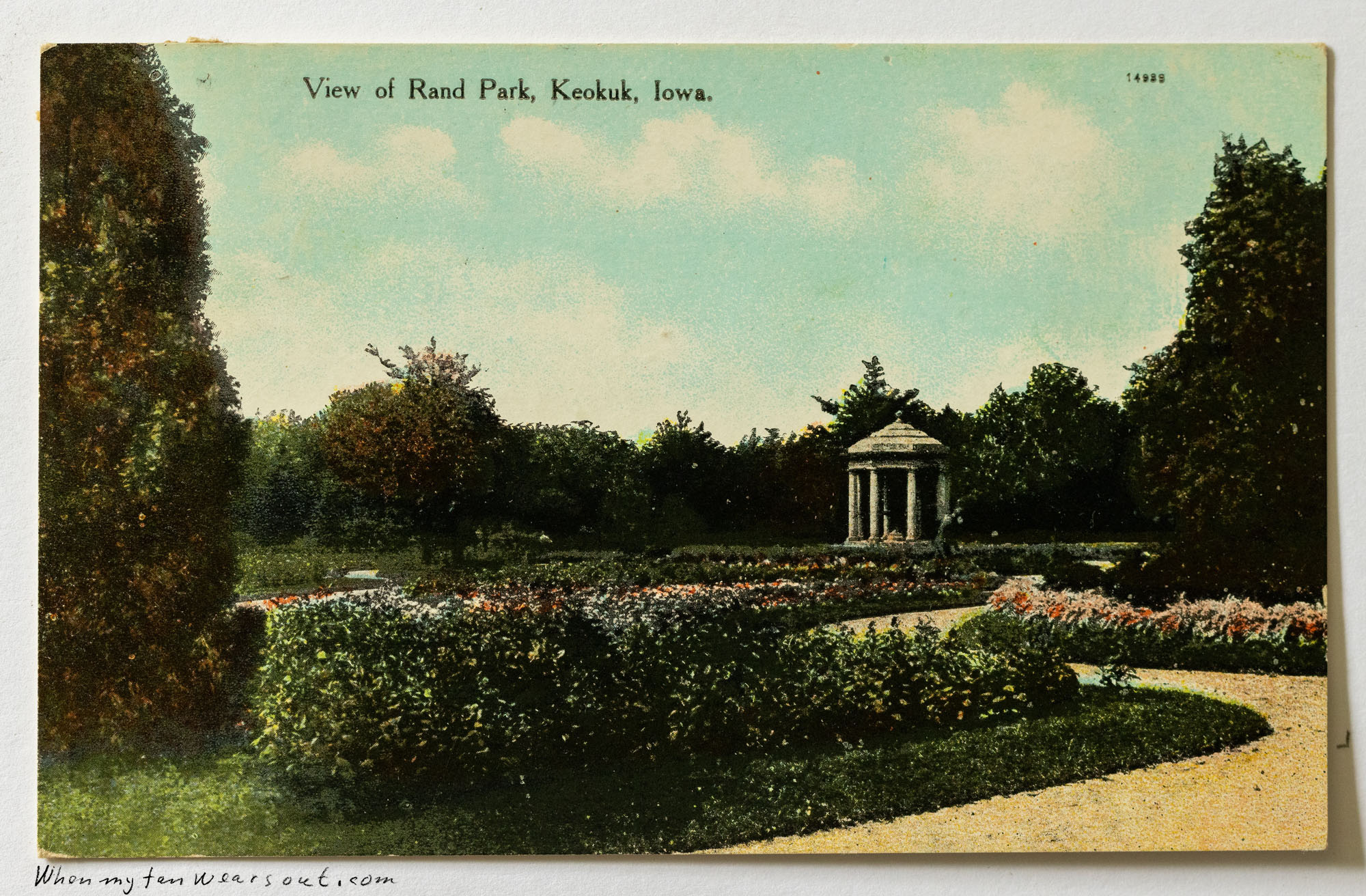
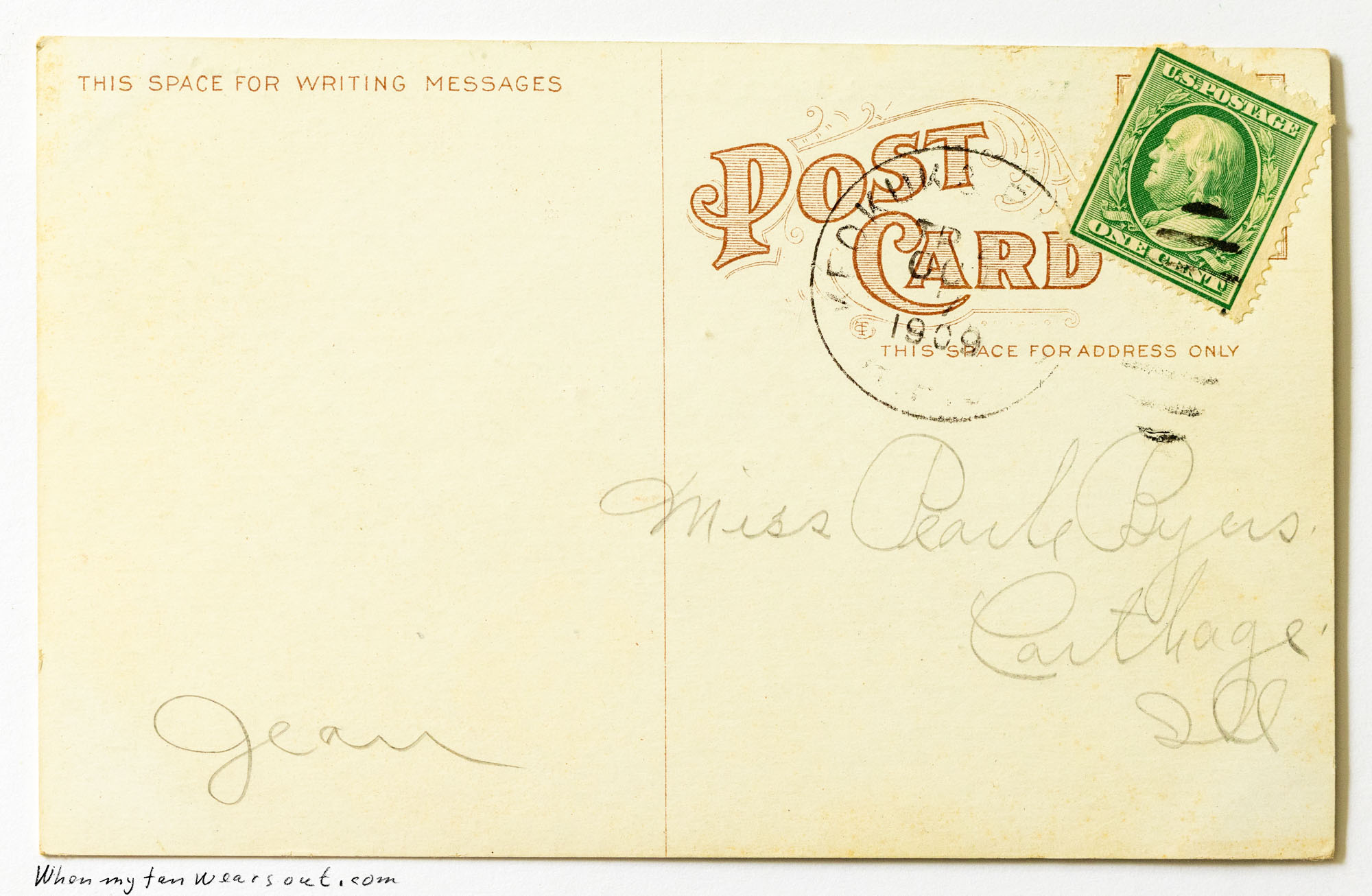
The stone circular colonnade — a monopteros — at Rand Park in Keokuk is visible from some distance on the bluffs above the Mississippi. Rand Park was named for a Keokuk family whose philanthropic gifts developed the grounds in the late 19th century. The park’s elevated position made it a natural viewpoint: on a clear day, the river curves toward the Illinois shore and the distant bluffs of Missouri are visible to the southwest. Jean, writing in 1909, sent this card signed just with her name.
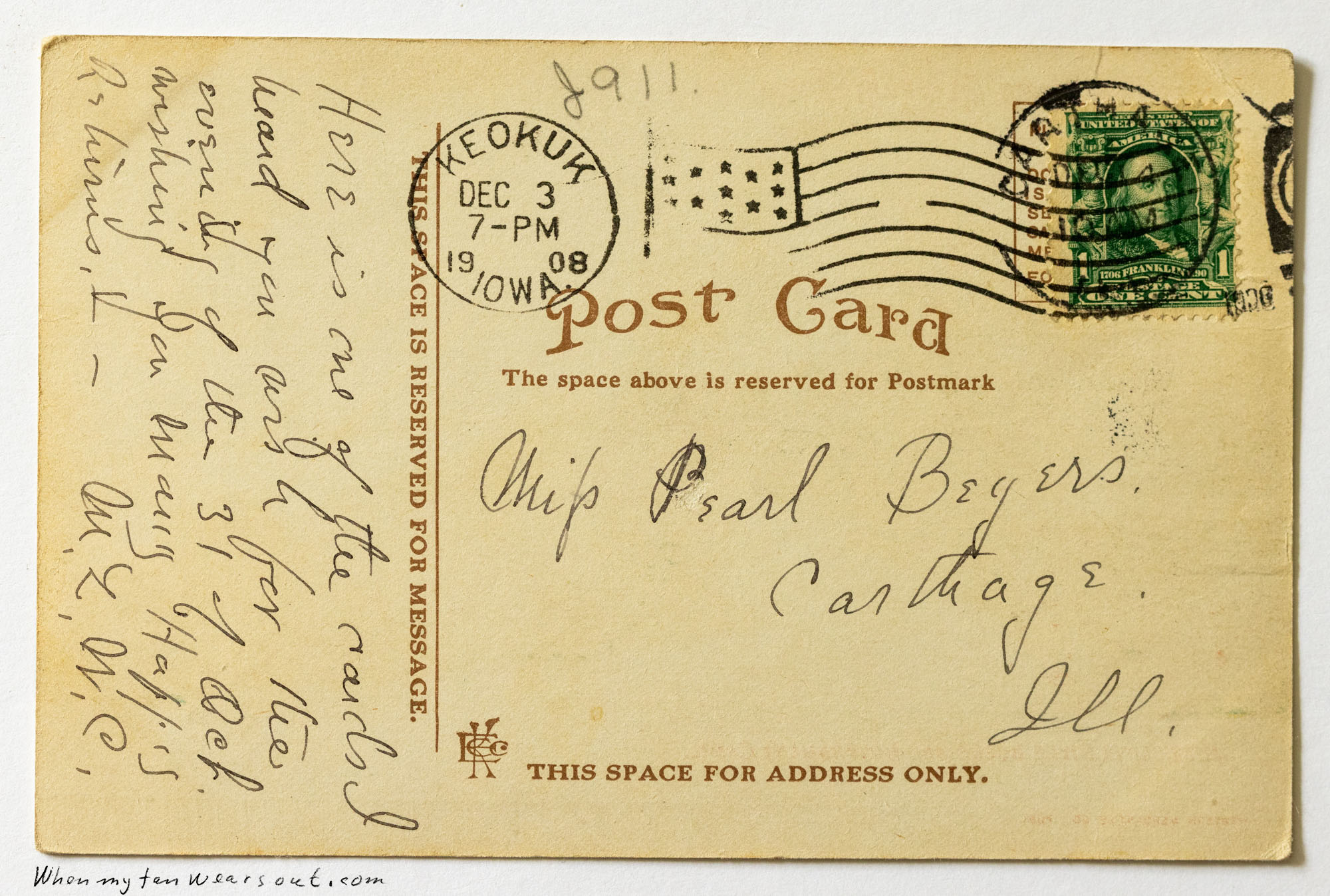
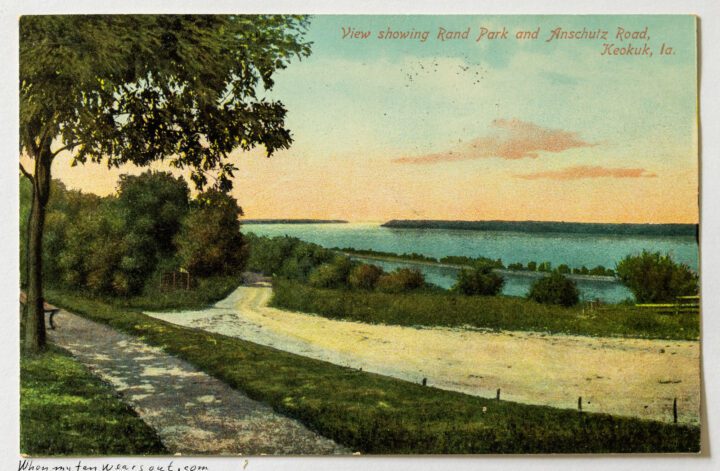
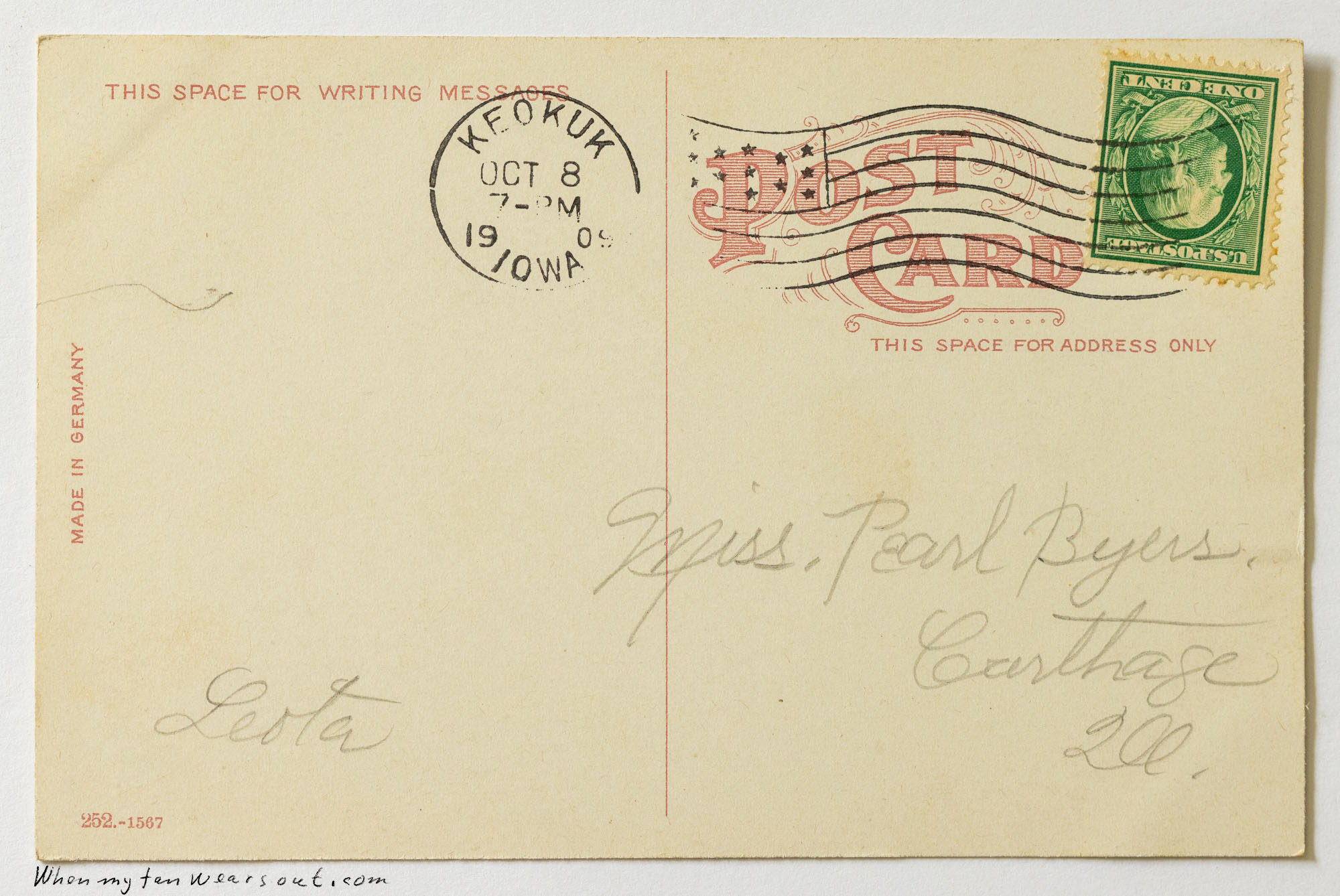
Rand Park in Keokuk, Iowa sits on the bluffs above the Mississippi River, looking out over the foot of the Des Moines Rapids — the stretch of river that made Keokuk strategically important for generations. The city was once among the most powerful on the upper Mississippi; Samuel Clemens piloted steamboats past these bluffs in the 1850s, and Keokuk was briefly considered as a possible capital of Iowa. By 1909, when Leota sent this card, Keokuk was still a substantial city, though the completion of the Keokuk Dam in 1913 would transform both the river’s character and the town’s identity.
The Corse Statue in Burlington, Iowa commemorates Brigadier General John Murray Corse, a Burlington native who commanded troops at the Battle of Allatoona in 1864 and received the famous signal “Hold the Fort” from Sherman. He held it. The equestrian monument stands near the northern entrance to Crapo Park. Julia sent this card in September 1908 and signed only her first name on the front — “Julia.” — with a separate signature on the back identifying herself as Mrs. Chesnut.
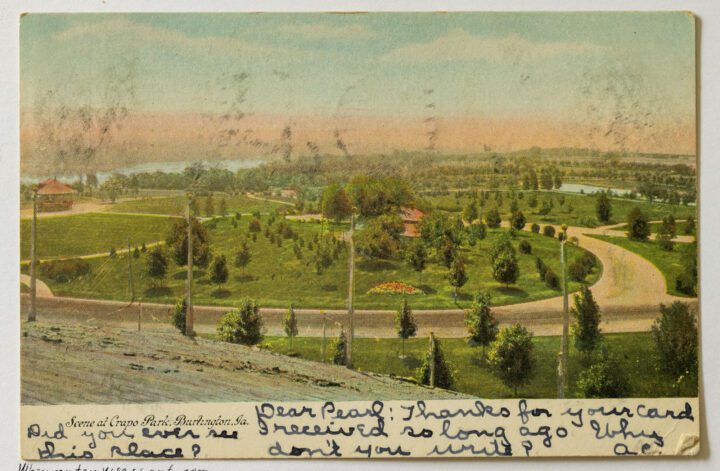
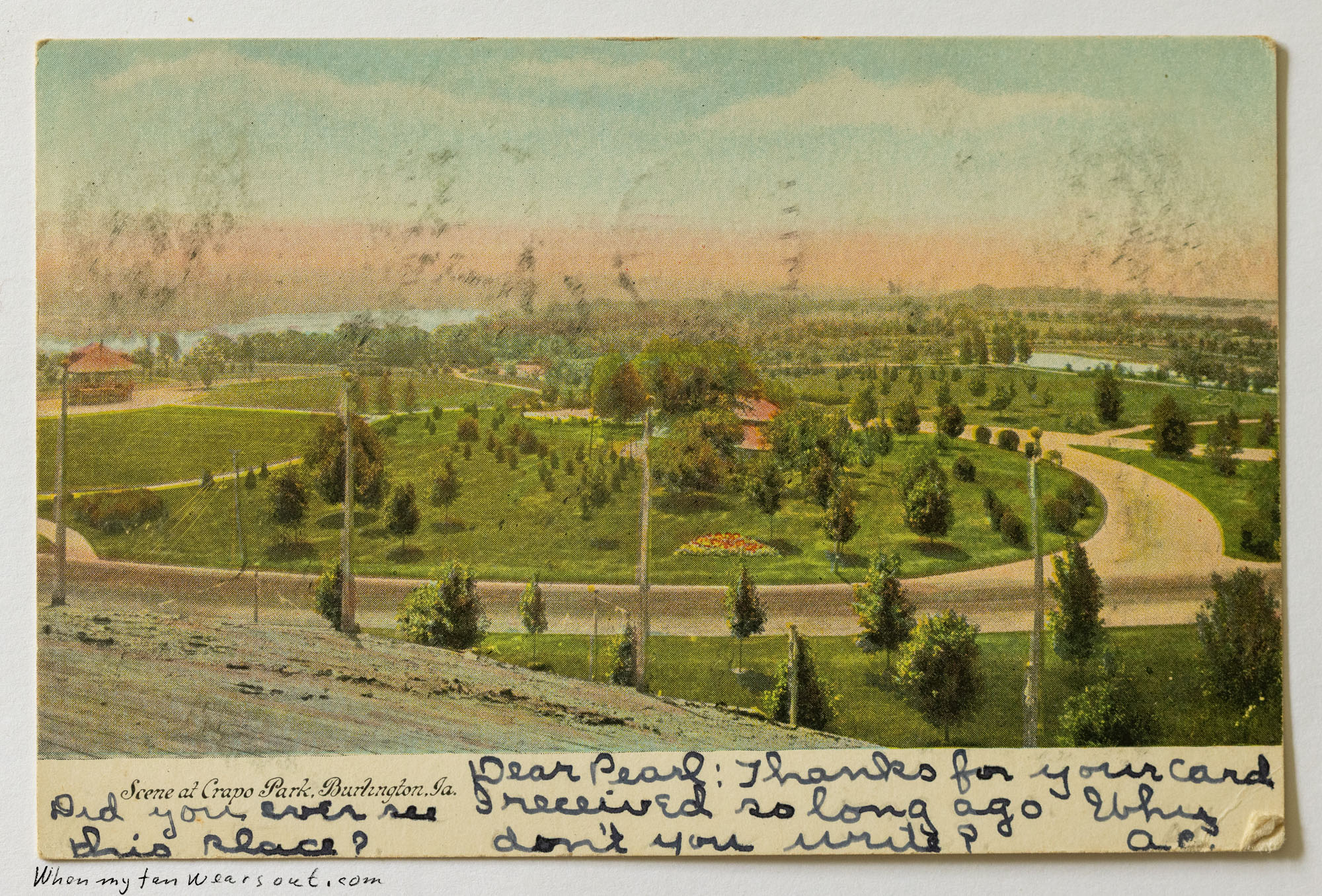
Front — Did you ever see this place? Dear Pearl: Thanks for your card received so long ago Why don’t you write? A C.
Postcard Information
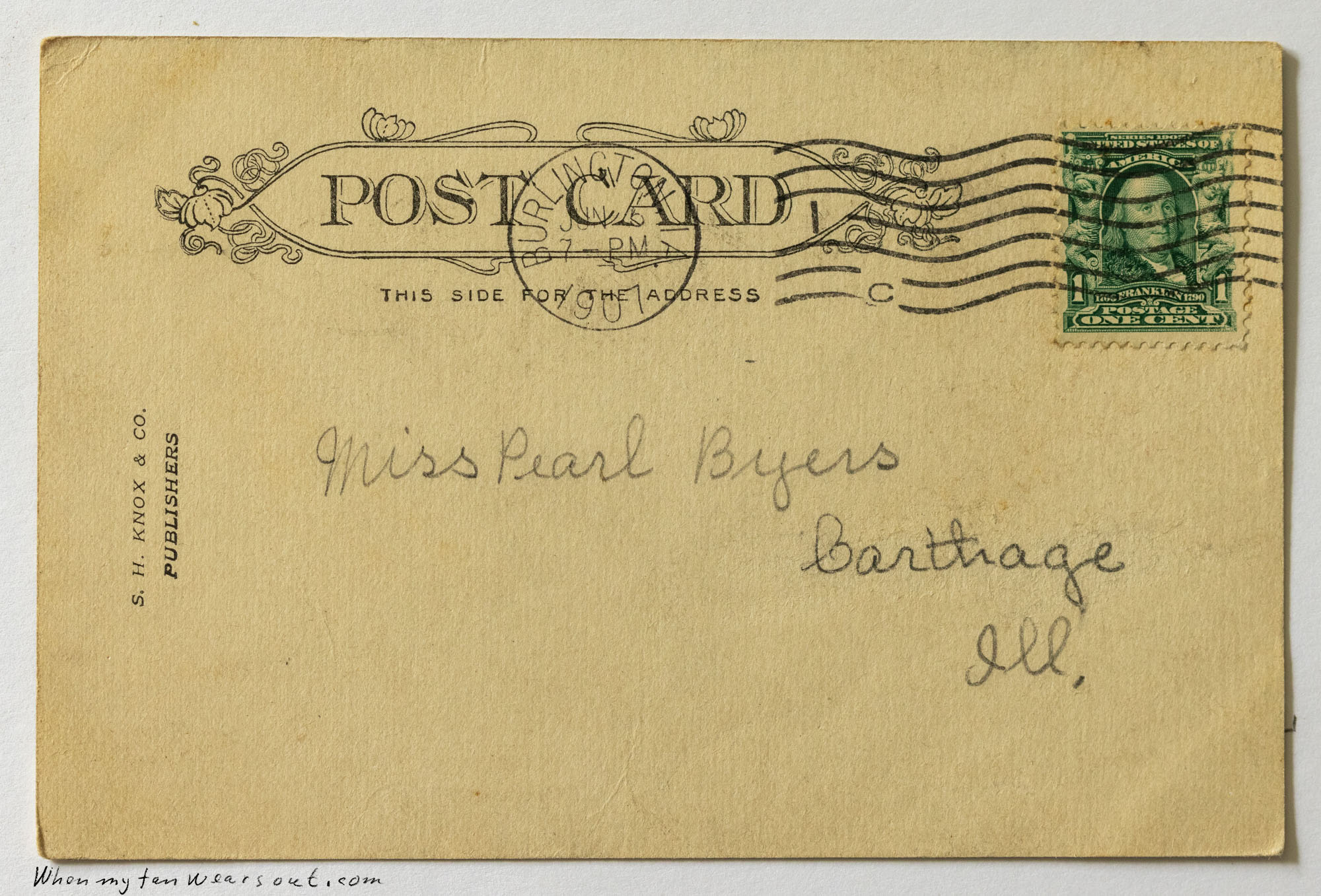
Postmark: Burlington, IA., JUL 27 1907
Sent To: Carthage IL
Era: Undivided Back (Pre-1907)
Publisher: S. H. KNOX & CO.
Stamp: 1¢
Distance Traveled: ~30 miles
Notes: message written on front instead of back
About This Card
Crapo Park in Burlington, Iowa was donated to the city by the family of Michigan Governor Henry Howland Crapo in the 1890s, developed from land along the bluffs above the Mississippi. By the time A.C. sent this card in July 1907, Crapo Park was already considered one of the finest municipal parks on the upper Mississippi — a winding drive through mature trees above the river, with pavilions, a small zoo, and Black Hawk Spring, a natural spring with a storied Sauk history. Burlington had been a prosperous railroad and manufacturing city since the Civil War, and the park was an expression of that prosperity.