Back — Write mon. [?] Write Still sewing. Are you planning to come down over Labor Day? I can be ready to come home if you are and my car fare will help. You wouldn’t have to come here for me. Only a suggestion so write me details if you plan anything. Going to K— [?] for more goods now. Raymond came home again last eve so I rented Lizzies room. Add. Co Elva. ma.
Postcard Information
Postmark: KEOKUK, IOWA, AUG 28 1939
Sent To: Chicago IL
Era: Linen (1930–1945)
Publisher: Nichols’ Book Store, Carthage, Illinois
Stamp: 1¢
Distance Traveled: ~240 miles
About This Card
This tree-lined walkway in Keokuk, Iowa — sent by “ma.” in a card postmarked from Keokuk — shows the mature park infrastructure the city had developed along its blufftop grounds by the early twentieth century. Keokuk’s parks benefited from its position above the river: the elevated terrain that made the city strategically important also gave it unusually dramatic views and the kind of naturally varied topography that parks commissions found easy to develop. Pearl’s mother was in Keokuk regularly — the city was about 30 miles from Fort Madison and 50 miles from Carthage.
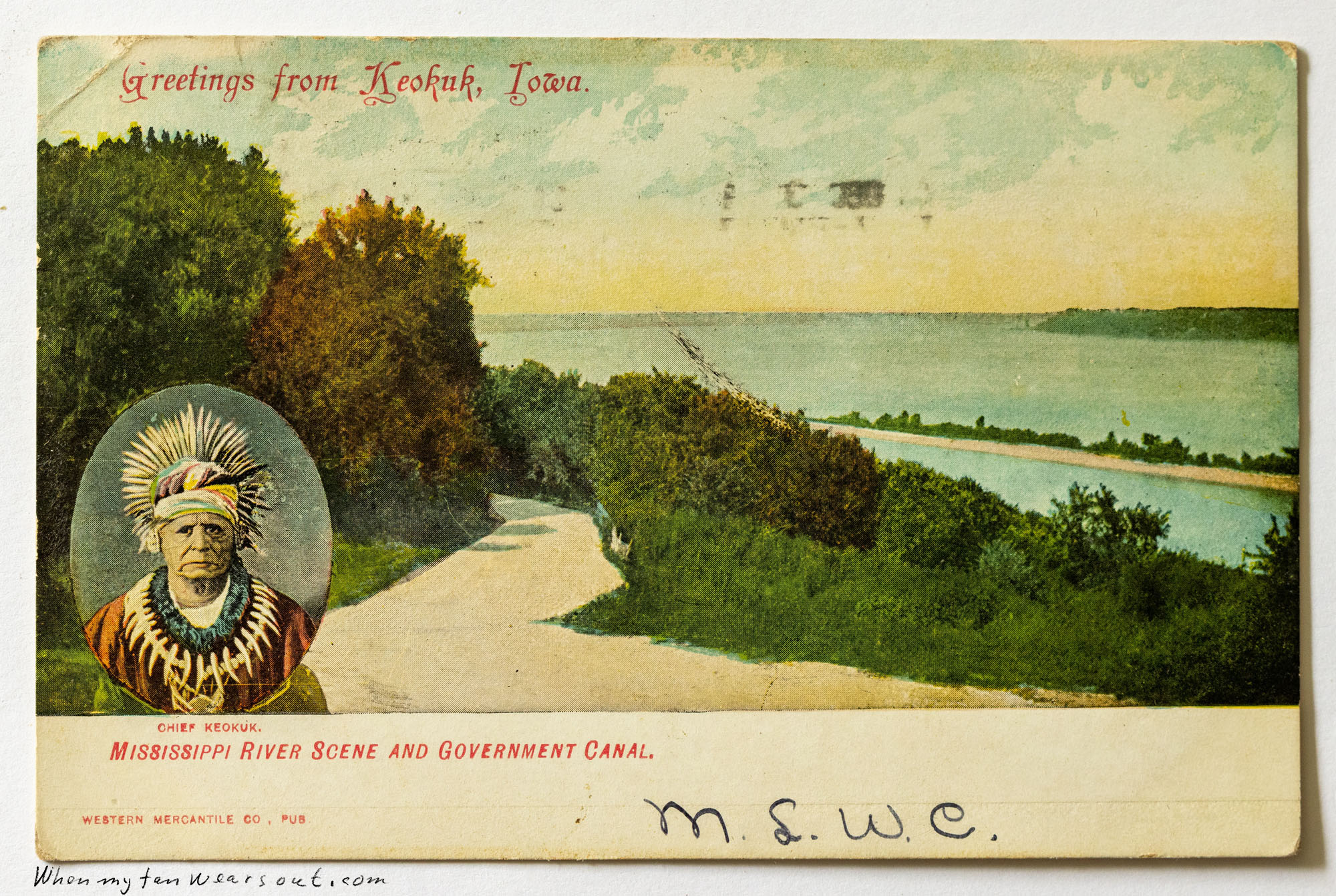
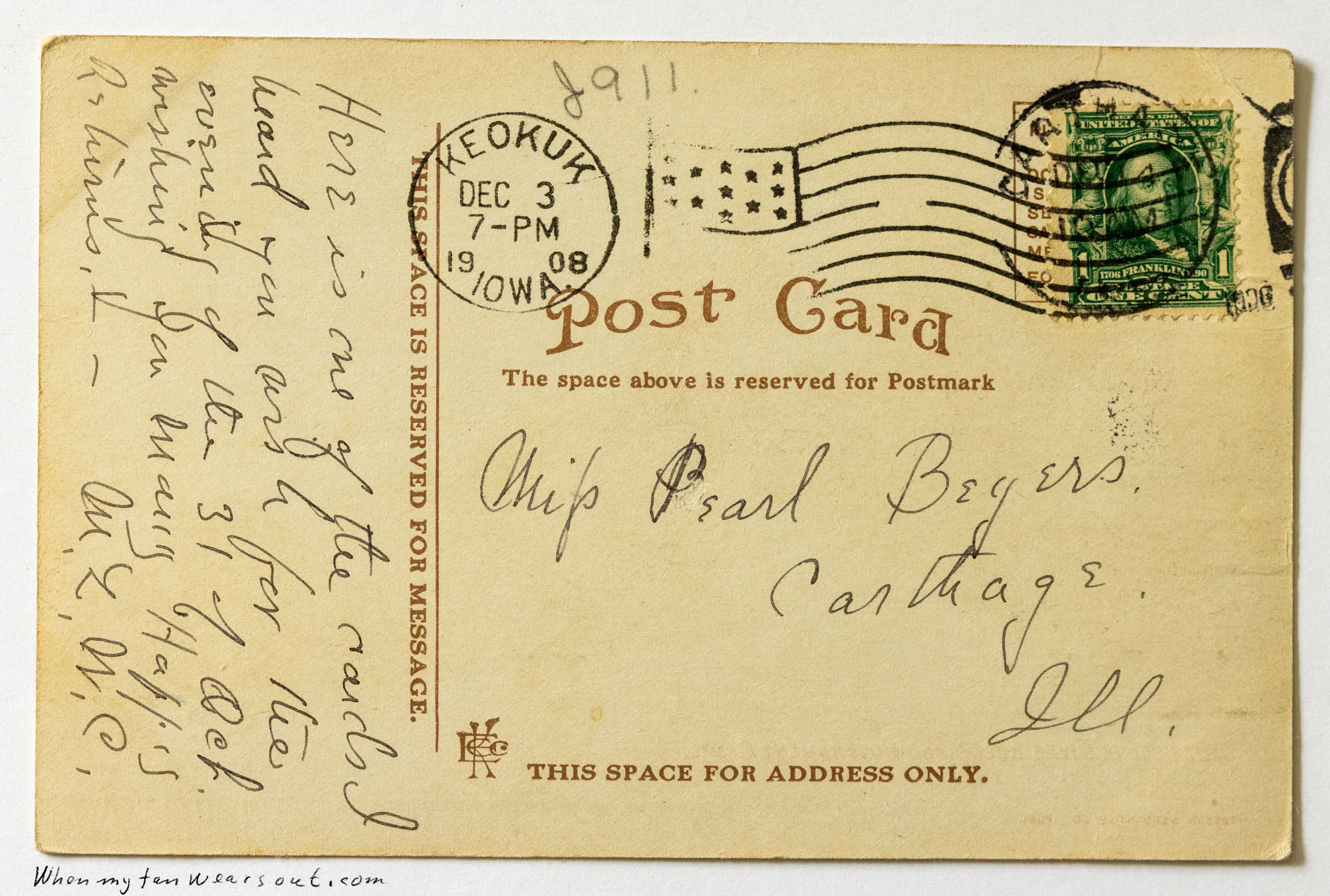
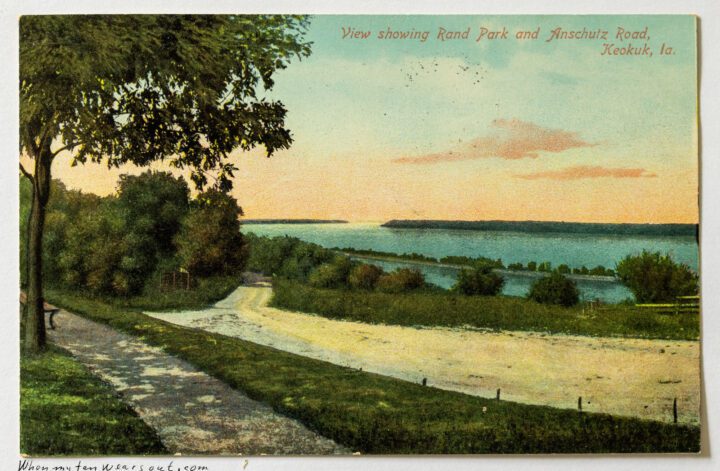
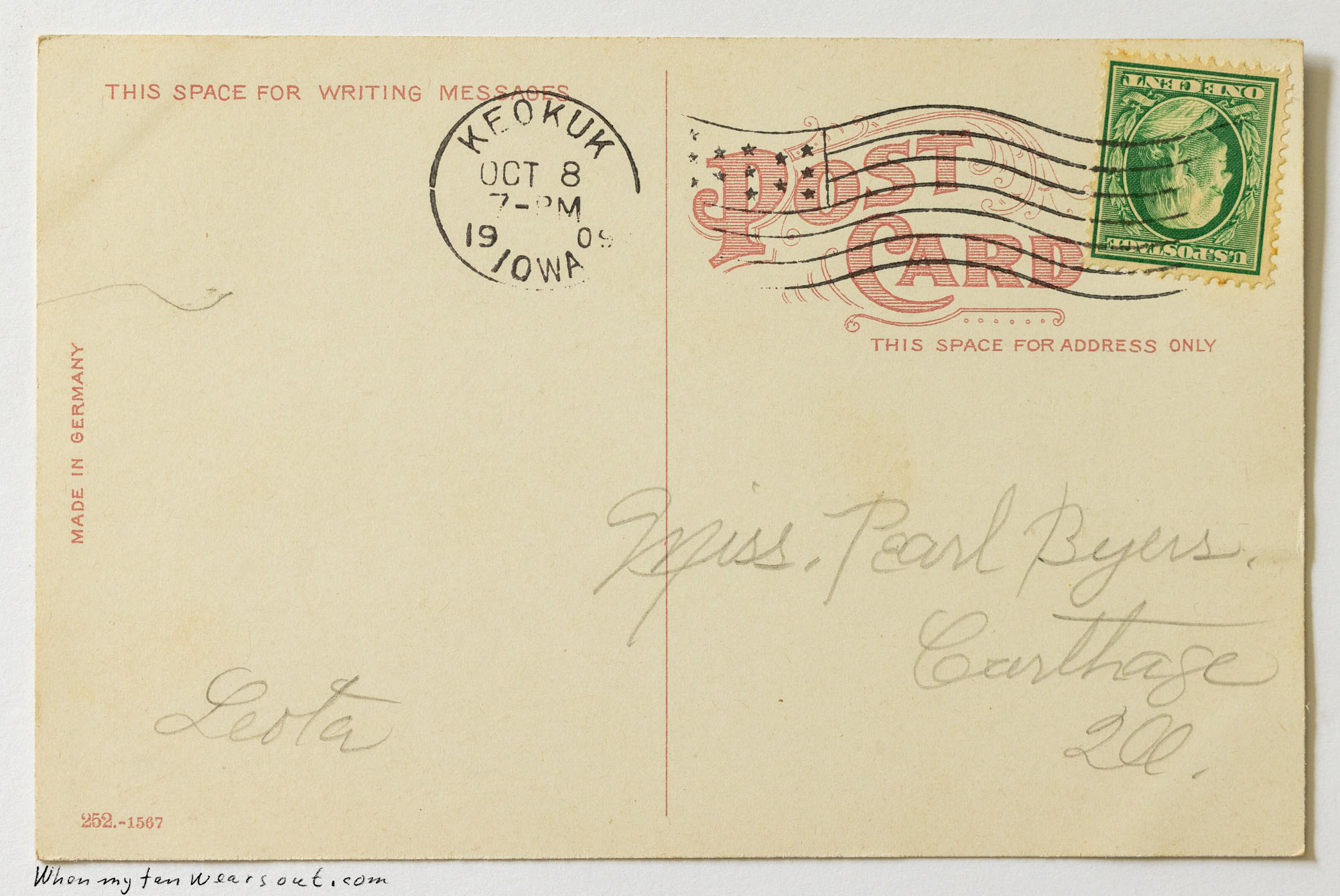
Rand Park in Keokuk, Iowa sits on the bluffs above the Mississippi River, looking out over the foot of the Des Moines Rapids — the stretch of river that made Keokuk strategically important for generations. The city was once among the most powerful on the upper Mississippi; Samuel Clemens piloted steamboats past these bluffs in the 1850s, and Keokuk was briefly considered as a possible capital of Iowa. By 1909, when Leota sent this card, Keokuk was still a substantial city, though the completion of the Keokuk Dam in 1913 would transform both the river’s character and the town’s identity.