
Postcard #0094: Sporting Edition, Wever, IA — Mayme to Pearl, July 1909

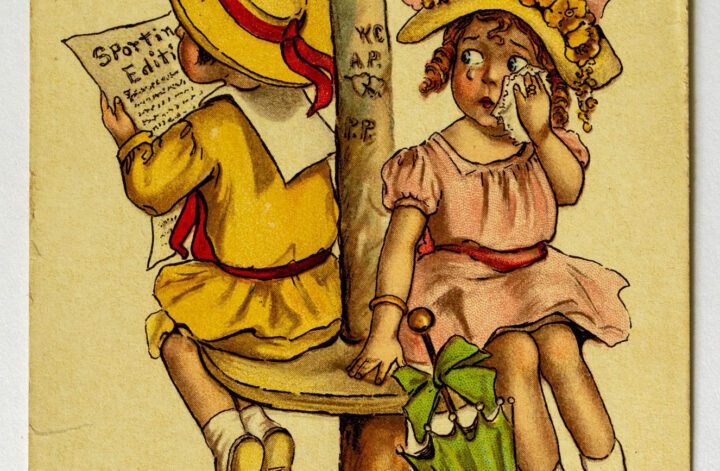
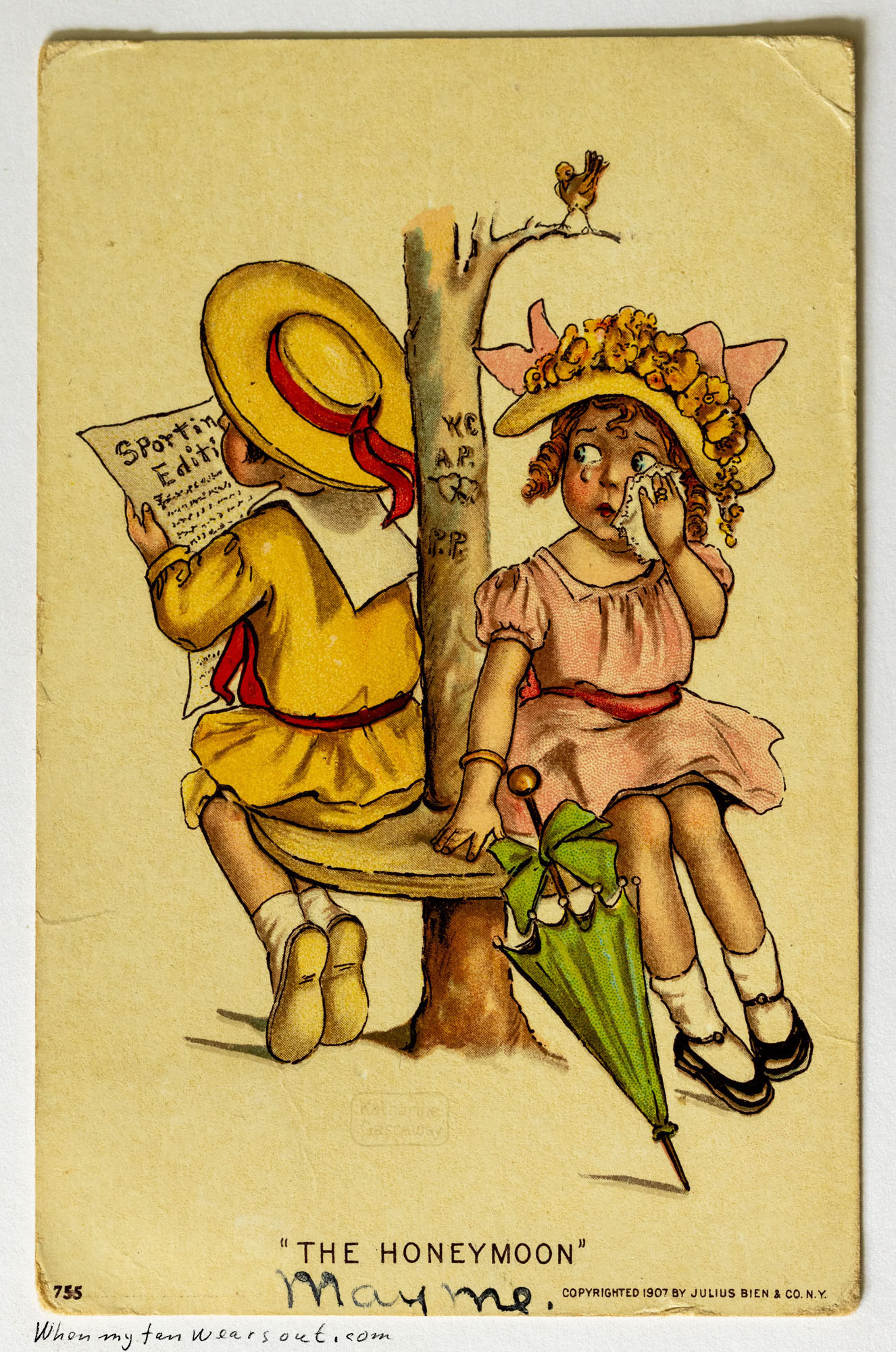
Front of postcard #0094: Illustration of a young boy and girl sitting back-to-back on a circular bench around a tree trunk. The boy on the left w

Transcription

Back — ] Mayme. ] Ans. soon as conv. My ring is real nice. [main message:] Rec’d your postal Sat. night & was glad to hear from you. How is this for warm weather? I am almost melted. I was up to Wever Sat. & Sun day night. Saw Annie & Fay [?] there too. Most everybody around here is busy threshing but we. We didn’t have any threshing to do & I’m glad of it. But wait til next yr. Oh, my.
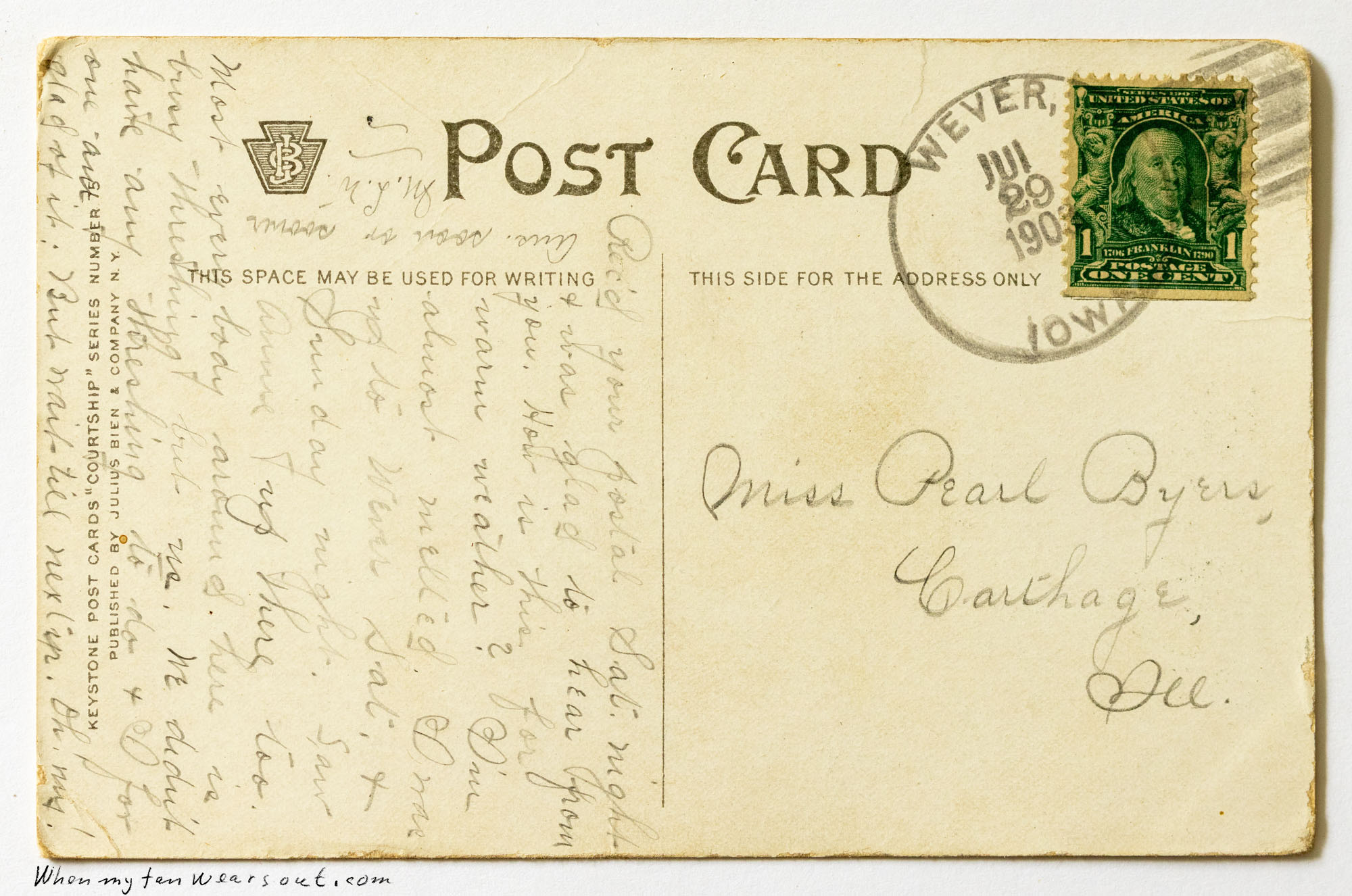
Back of postcard #0094

Postcard Information

  • Postmark: Wever, Iowa, JUL 29 1909
  • Sent To: Carthage IL
  • Era: Golden Age (1907–1915)
  • Publisher: Julius Bien & Company / Keystone Post Cards, New York, N.Y.
  • Stamp:
  • Distance Traveled: ~30 miles
Continue Reading

Postcard #1084: Presbyterian Church, Carthage, IL — Hallie to Pearl, October 1909

Front of postcard #1084: Black and white real photo postcard showing the interior of the Presbyterian Church in Carthage, Illinois. A large pipe

Transcription

Back — Carthage Ill. 10-13-09 Hello Pearle. What do you know about this? Hope you will get this card safe. am glad you are having a good time only wish the weather was better. never mind the weather. Ask Harvey if he Dares me. Better not. Hallie.

Back of postcard #1084

Postcard Information

  • Postmark: CARTHAGE, ILL., OCT 13 1909
  • Sent To: La Harpe IL
  • Era: Golden Age (1907–1915)
  • Stamp:
  • Distance Traveled: ~15 miles

About This Card

The interior of the Presbyterian Church in Carthage, Illinois shows the characteristic worship space of a mainline Protestant congregation in a small county seat: pale walls, wooden pews, a central pulpit, colored glass in the windows. Hallie sent this real photo postcard from Carthage — the kind of postcard a congregation member might send to a friend who had moved away, showing what the church looked like inside. Carthage’s Presbyterian congregation was established in the early years of the town’s settlement and remained one of the city’s significant institutions.

Continue Reading