Postcard #0820

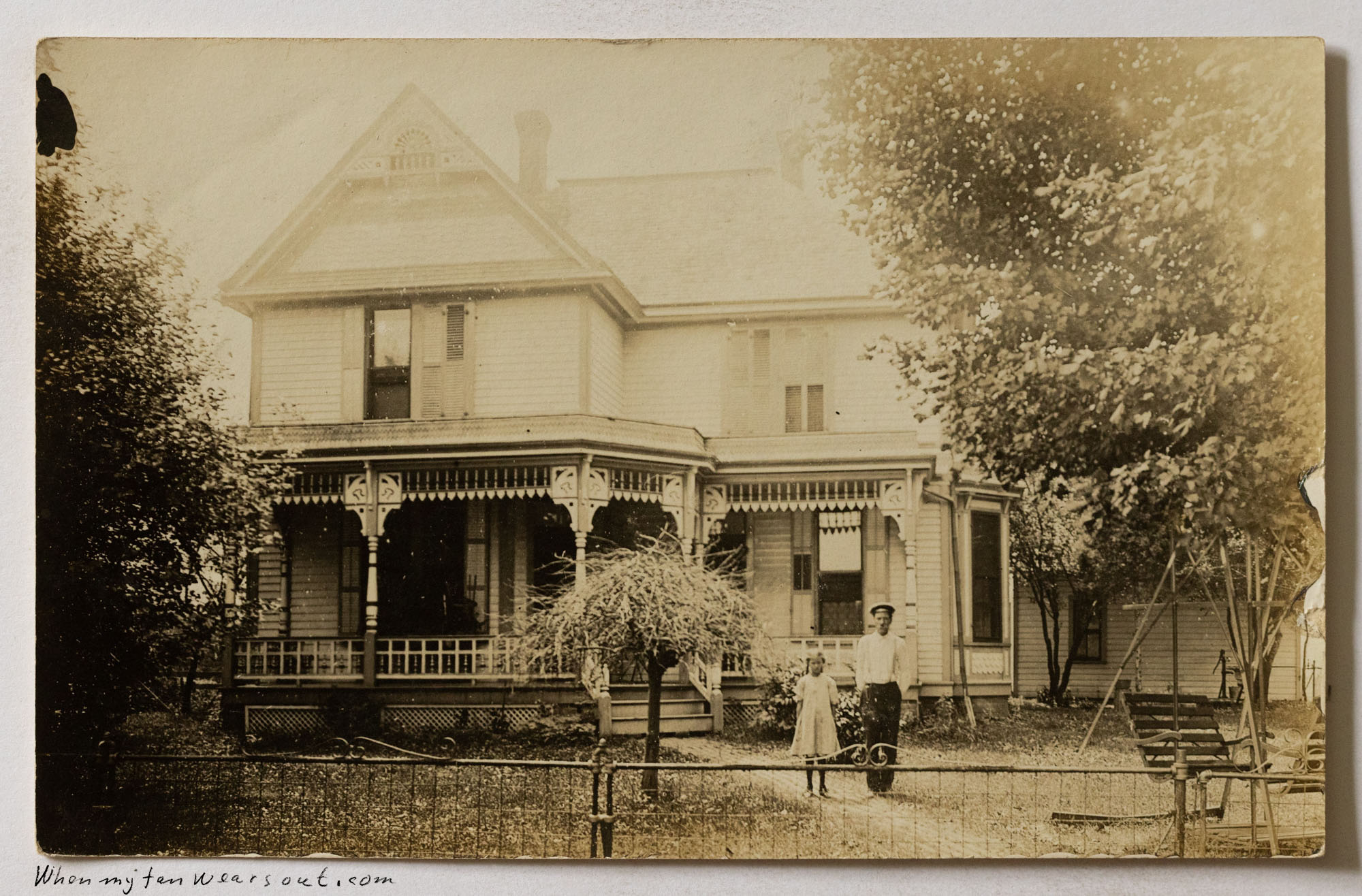
Front of postcard #0820: Real photo postcard of a large two-story Victorian house featuring a prominent wrap-around porch with ornate decorative
Back of postcard #0820

Postcard Information

  • Postmark: ILLEGIBLE
  • Sent To: Carthage IL
  • Era: Golden Age (1907–1915)
  • Stamp: NOT VISIBLE
  • Distance Traveled: Undetermined
  • Notes: Blank card. Real Photo Postcard (RPPC).

About This Card

A large two-story Victorian house with a wrap-around porch and ornate decorative trim — the kind of house that signaled a family of means in a small Midwestern or Southern town. Two children stand in the yard behind a low iron fence. The divided back with no additional markings places this in the 1907–1915 range. Houses like this were aspirational subjects for real photo postcards; having your home on a card was a statement. The children’s clothing — a girl in a light dress, a boy in a white shirt and cap — is typical summer dress of the era. Without any identifying caption, the location can’t be determined, but the house and its inhabitants clearly mattered enough to someone to have this card made.

Continue Reading

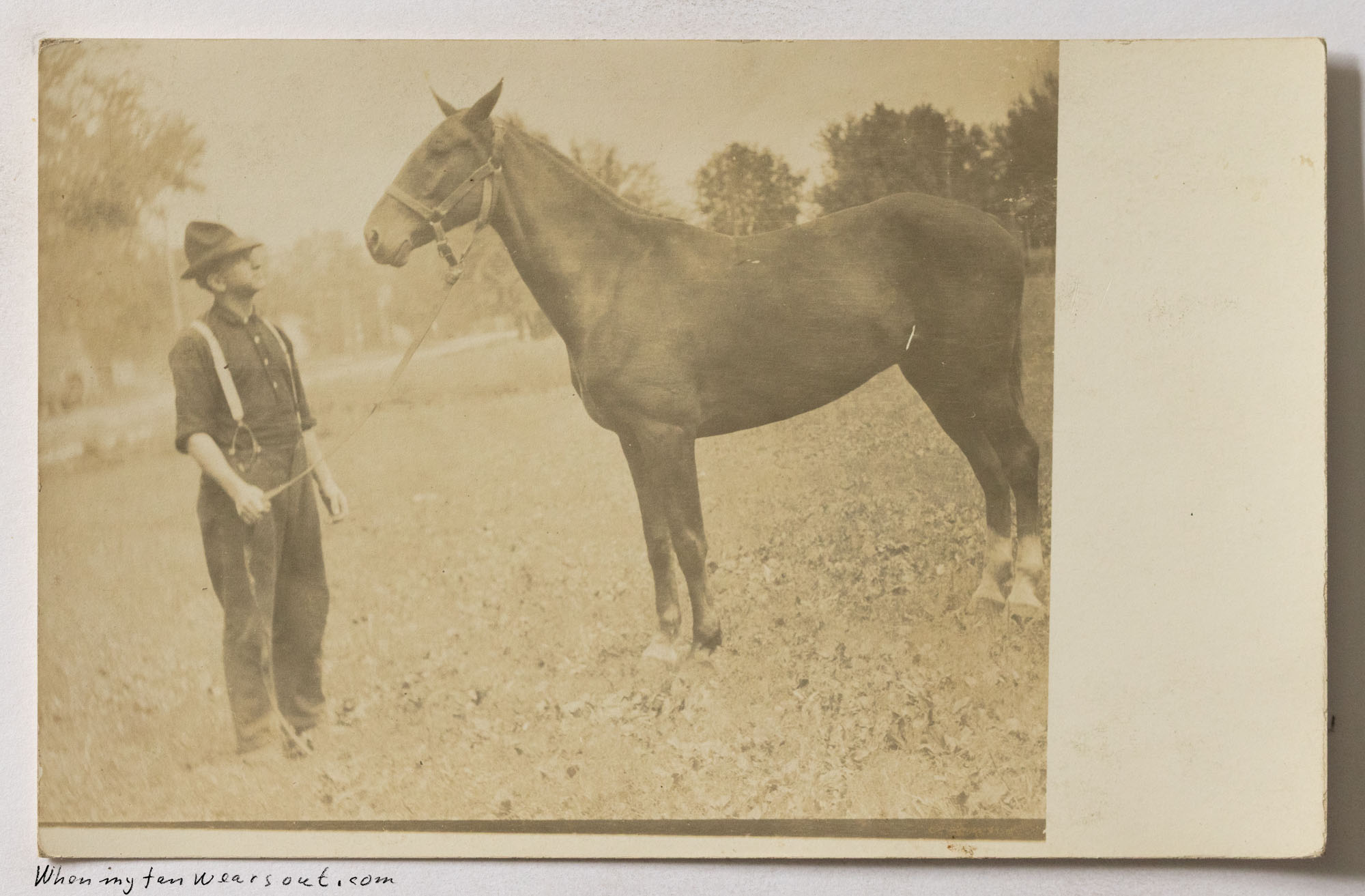
Postcard #0819: man in a hat

Front of postcard #0819: Real photo postcard showing a man in a hat, dark shirt, and suspenders holding a lead rope attached to a large horse. Th
Back of postcard #0819

Postcard Information

  • Postmark: ILLEGIBLE
  • Sent To: Unknown
  • Era: Golden Age (1907–1915)
  • Stamp: NOT VISIBLE — Stamp missing but printed box visible.
  • Distance Traveled: Undetermined
  • Notes: Real photo postcard. Blank card.

About This Card

A man in a hat, dark shirt, and suspenders holds the lead rope of a large horse in an open field. The AZO stamp box dates the photographic paper to 1904–1918. Horses were still central to rural and small-town Midwestern life in this period — farm work, transportation, and commerce all depended on them. Harvey Sights grew up in that world, and many men Pearl and Harvey knew would have posed for exactly this kind of card: a man and his horse, evidence of work and self-sufficiency. The wide unprinted border on the right side of the card suggests the photographer may have had the image printed with a standard margin for writing space, a common choice.

Continue Reading

Postcard #0817: begging

Front of postcard #0817: A real photo postcard featuring four separate photographic exposures arranged in a grid. Each image captures dogs in the
Back of postcard #0817

Postcard Information

  • Postmark: ILLEGIBLE
  • Sent To: Unknown
  • Era: Golden Age (1907–1915)
  • Stamp: NOT VISIBLE
  • Distance Traveled: Undetermined
  • Notes: Blank card. Front features a composite of four distinct photographic exposures.

About This Card

Four exposures on a single real photo postcard, all of the same dog — jumping, sitting with a companion, begging on its hind legs. The AZO stamp box dates the paper to 1904–1918. Composite photography like this required either multiple exposures on the same plate or careful darkroom assembly; by the postcard era, Kodak and others made it straightforward enough that amateur photographers did it regularly. Dogs as postcard subjects were enormously popular in the Golden Age — they appeared in greeting cards, souvenir sets, and custom portraits. Someone in this household was proud of their dog and had the means and interest to document it carefully.

Continue Reading

Postcard #0813

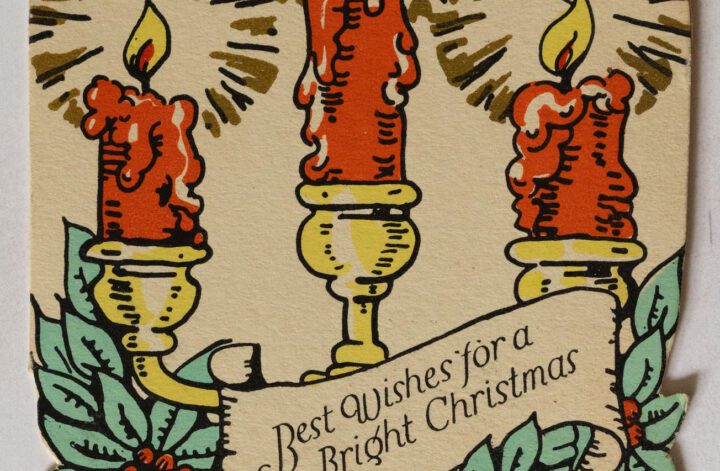
Front of postcard #0813: Die-cut card featuring three burning orange candles with gold-colored light radiating from them. On the left is a gold-c
Back of postcard #0813

Postcard Information

  • Postmark: ILLEGIBLE
  • Sent To: Carthage IL
  • Era: Unknown
  • Stamp: NOT VISIBLE
  • Distance Traveled: Undetermined
  • Notes: Die-cut card; contains no postal markings; appears to be a greeting card or gift tag rather than a postcard; evidence of having been pasted into an album.

About This Card

A die-cut Christmas card featuring three burning candles, a gold bowl of fruit, and the greeting “Best Wishes for a Bright Christmas” — not a postcard in the conventional sense, but a greeting card or gift tag that found its way into Pearl’s collection, still carrying the marks of having been pasted into an album. Die-cut paper novelties were popular Christmas gifts and enclosures from the Victorian era through the 1920s; this one was clearly kept and valued. Pearl grew up in a household where Christmas was observed with care, and small paper ephemera like this were the kind of keepsake that ended up pressed between the pages of albums and books. The back is entirely blank — no postal markings, no printed lines, nothing. It was made for the hand, not the mail.

Continue Reading